Biblical Worldview – Audio – Jun 5, 2022 Sunday Sermon – Pastor Ethan Scott dives into Galatians 1:1-5. May God bless you and your family as we grow together in the Word!
Topics include:
How does persecution happen? Through false teachings – idolatry, dangerous
Church – lack of unity and integrity in the body of Christ
Bombardment of manmade ideas that puts the focus on man, not God.
Cultural Christianity
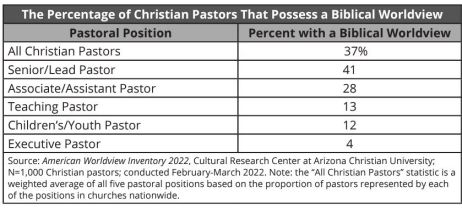
Barna Survey – Biblical Worldview Survey
As a percent of church attendance, the smallest its ever been
Choose to worship at the church that is closest to the Bible
Paul’s message against false teachings: False teachings produce idolatry
Paul’s authority was challenged to undermine the Gospel
The New Covenant
The True Gospel glorifies God, man’s religion seeks man’s glory
How do these truths impact us and how we live?
Repent, accept and believe in Christ – (leads to eternal life)
Claim discipleship in Christ, share the Word
Focusing on good works that bring attention to man and not God, produces division in the church and is idolatry
As a Church, we must teach the Gospel in every area of our gathering and in our community – scare with truth as opposed to appeasing with lies.
To ensure we do not proclaim false teachings, we must abide in God’s Word.
Be teachable – Only God has it all figured out.
Be gracious and peaceful with your brothers and sisters in Christ.
The denominations that produced the highest proportions of adults with a biblical worldview were non-denominational Protestant churches (13%), Pentecostal churches (10%) and Baptist churches (8%).
Seven Life-Changing Questions (George Barna, Thinking Like Jesus, pg. 14)
o. Court House Projects. Commissioners voted to move forward on contracting for two additions to the courthouse. One on the north side to allow for a Sally Port, a holding cell, and a separate entrance. Currently, prisoners have to use the same entrance as the public and the only holding area in a stairwell. An addition to the East Side is also planned to allow more space for security screening. Currently, the security officer and metal detector are located in the narrow hallway. The total cost is estimated at around $687, 500. The judge has previously obtained grants to make needed renovations and comply with ADA requirements. The Sally Port is a “need” as is the space for security screening. Funding was identified with the majority coming from the funds set aside to purchase the CRC building from the school that was to be used by the Prosecutor’s Office. No current plans to replace the Prosecutor’s Office. In 2019, the county spent 16K on a needs study that failed to make the case that the county needed a new “Justice Center” at a cost of around $10 million. This would have provided space that would have included the Court Staff and Prosecutor’s Office.
o. Traffic Light – at the Park Entrance – North Gate. After a recent accident, the issue of requesting a traffic light from the State has been renewed. I suggested the county post the traffic study that was conducted by the State. The analysis in the past has not justified a Light. Given the volume and type of traffic (more RVs for example), a light would slow traffic, cause back-ups and delay travel times.
o. Road Projects. Bids were received from four contractors for the currently proposed projects. Total bid costs ranged from $3,118,771 to $4,015,995. The winning vendor and specific projects will be announced at the next commissioner meeting.
o. New Coroners Office. The current cost is estimated at 175K and work may begin in late summer.
The two most important issues at the root of every debate about the application of morality to civil government and culture are the standards we use to judge good and evil and the entity that decides those standards. How we resolve both will determine the future of our nation. – Squires
As for “Christian nationalism,” WE RECOGNIZE that for some, this simply refers to a healthy form of Christian patriotism, of loving God and loving one’s country. In that sense, the term is benign.
WE ALSO RECOGNIZE that there is a dangerous and unhealthy form of “Christian nationalism,” one that speaks of a potential Christian uprising against the government or hints at the use of force to advance God’s kingdom.WE CATEGORICALLY AND UNEQUIVOCALLY DENY any affiliation with or connection to that form of Christian nationalism.
The Christian left takes a very different approach because it sees both the Bible and the Constitution as “living documents” that should evolve – both in meaning and application – as times change. For theological liberals, the designer is acknowledged, but individuals and the people who wield the most influence in a particular context define each aspect of creation and determine its purpose.
A recent Associated Press story claimed scholars characterize Christian nationalism by “a fusion of American and Christian values, symbols and identity” as well as the the belief that God “has destined America, like the biblical Israel, for a special role in history” and that the country “will receive divine blessing or judgment depending on its obedience.”
Those features sound ideologically neutral, … but most journalists and political liberals frame Christian nationalism as a white, conservative, patriarchal theonomic enterprise. They have created a religious avatar that, to quote one prominent historian of religion and society, is embodied by the contorted theology of Jesus and John Wayne.
But, think about it, who in the civilized West would oppose those who love God and country (i.e. Christian Nationalists) other than Luciferian globalists?
What Is Christian Nationalism? An explainer on how the belief differs from other forms of nationalism, patriotism, and Christianity. PAUL D. MILLER|
Christian nationalism is the belief that the American nation is defined by Christianity, and that the government should take active steps to keep it that way.
An Associated Press article on the influence of “Christian nationalism” on the 2022 primary elections has confirmed the fears of many voices on the left who are calling for action, lest the nation perish.
MSNBC host Joy Reid said via Twitter she was “glad to see the mainstream media beginning to make it plain, rather than trying to sugarcoat or both-sides this, because Christian nationalism poses a very real threat to American national security and social cohesion.”
But scholars generally define Christian nationalism as going beyond policy debates and championing a fusion of American and Christian values, symbols and identity. …Christian nationalism, they say, is often accompanied by a belief that God has destined America, like the biblical Israel, for a special role in history, and that it will receive divine blessing or judgment depending on its obedience.
Christian nationalism is emerging alongside and in some cases overlapping with other right-wing movements, such as the conspiratorial QAnon, white supremacy, and denialism over COVID-19 and the 2020 election. Christian prayers and symbols featured prominently in and around the U.S. Capitol during the Jan. 6, 2021, insurrection there.
“In all manmade worldviews—which is everything but biblical Christianity—humans are ultimately attempting to construct and define human rights. If human rights originate from man, they can be added to, subtracted from, modified, revoked, or selectively applied by man. Old rights can be withdrawn to coerce and control people. New rights can be easily invented to push an agenda.”
The council voted 3-2 in favor of a second reading. A motion was then made to adopt the ordinance, passing with the same votes. Council President Nancy Crocker, Vice President Anna Hofstetter and councilmember Tyra Miller all voted in favor of the commission. Council members Jane Gore and David Rudd opposed both the second reading and the adoption.
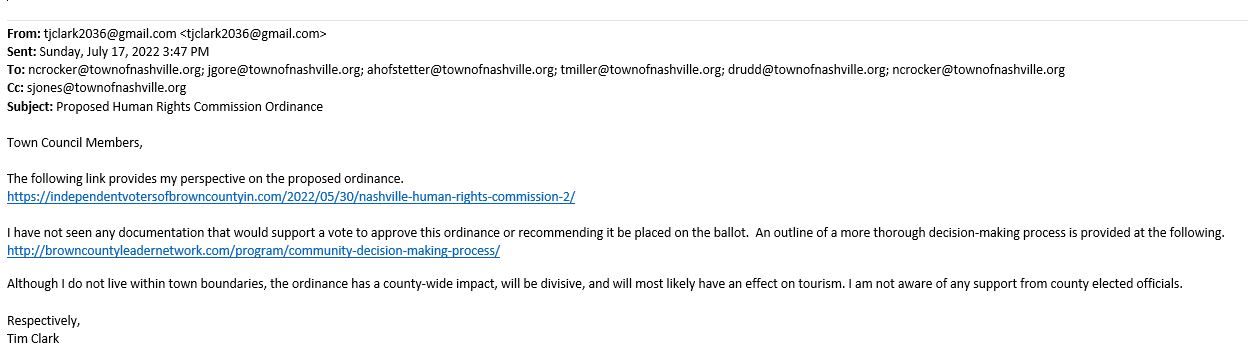
Nashville Town Council Meeting Notes, July 21, 2022, 6:30 p.m. On the topic of the proposed Human Rights Commission Ordinance, the public was misled by the Town Council. As advertised, the council did not vote on a final version of the ordinance. The council voted on the first reading of a revised ordinance (Revised July 7, 2022). The public was not notified in advance or at the beginning of the meeting of the opportunity to comment on the revised ordinance. This version of the ordinance was shared at the July 7, 2022 council roundtable discussion (not an official meeting) but was not available on their website prior to that meeting. (Facebook Post at Brown County Matters)
At the beginning of the council meeting, President Crocker thanked everyone for their input on the ordinance. She stated that the council would be voting on a “reading of the final version of the ordinance but not a vote .” This was not an accurate statement. They did not vote on a “final version.” She went on to suggest that those attending just on the issue of the vote may not be interested in remaining.
On agenda item 6b, “Consider Ordinance 2022-03 Human Rights Commission Ordinance”, President Crocker stated that the original ordinance “was revised quite a bit and they were kind of going back to square one.” The town attorney advised that a “first reading” of the revised ordinance (revised July 7, 2022) was required.
Anna Hoffstetter made a motion to suspend the rules for a second reading so that the ordinance could be passed immediately. Her motion was not approved.
The council without any discussion on the comments, questions, and concerns provided by the public, voted to approve – the only no vote was from Dave Rudd.
Audio. Discussion on the first reading – revised ordinance at the 1:37 mark.
I suggest that the council send this draft back to a committee. The recommendation by the committee to create a commission was based on opinions and anecdotes. The public has provided sufficient information verbally and in writing to reinforce the need for a more thorough review of the facts, evidence, and analysis of alternatives.
Placing the issue on the Nov ballot is not an option.
July 21, 2022. Brown County Matters. Statement – President by the Town Council. My response and counter-responses. “FIY….. A sentence in the Democrat implied we are voting on the Human Rights Commission Ordinance tonight. That is not and never was my intention. The plan was to read the final revised ordinance and then vote next month. The online version of the paper has been corrected.”
My Response: Nancy Crocker You inferred at the last meeting that a vote could be taken if a motion was made and seconded and it was also mentioned that the idea could be placed on the ballot in Nov. Link below to the audio of the last meeting and background information on the proposed human rights commission ordinance to include the email addresses of town council members for those wanting to express an opinion.
Nancy Crocker That vote would have to be unanimous to vote on the ordinance.
July 21, 2022. Brown County Democrat – Facebook Post. NOTE: An earlier version of this story said the Nashville Town Council will vote on a second reading of the proposed Human Rights Commission. A second reading will be done, but no vote is set to be taken in regards to the commission, council president Nancy Crocker said today. The story has been updated for clarification.
July 21, 2022. Nashville Town Council Meeting – decision regarding the proposed Human Rights Commission. (Meeting Information).
Nancy Crocker, President (term 1/01/19 to 12/31/2022). Jane Gore, Vice-President (term 1/01/20 to 12/31/2023) Anna Hofstetter, Council Member (term 1/01/2019 to 12/31/2022) Tyra Miller, Council Member (term 1/01/20 to 12/31/2023) Dave Rudd, Council Member (term 1/01/2019 to 12/31/2022)
We hold these Truths to be self-evident, that all Men are created equal, that they are endowed by their Creator with certain unalienable Rights, that among these are Life, Liberty, and the Pursuit of Happiness— Declaration of Independence
In a Biblical worldview, man is imperfect, a sinner. Bigotry represents sinful behavior and sin is an inherent part of human nature. In alignment with the Constitution, civil rights laws have been created to identify unacceptable actions relative to discrimination, bias, prejudice, and bigotry. These laws are administered by the Federal government and the Indiana Civil Rights Commission (ICRC).
The American Civil Liberties Union (ACLU) has defined the distinction between Civil Rights protected by the Constitution and “Human Rights”. “The ACLU Human Rights Program (HRP) is dedicated to holding the United States accountable to international human rights laws and standards as well as the rights guaranteed by the U.S. Constitution.”
A New Religion? Are “Human Rights” as “man” defines them independent of a biblical worldview, the new religion of the progressive left? Note that with ‘Rights” there are also “Wrongs.” Who decides what is right and wrong and by what moral authority?
Similar to the Constitution, the Bible is being considered by the progressive left as a “living document” that should be interpreted to reflect the current times.
“The Indiana Civil Rights Commission (ICRC) enforces the civil rights laws of the State of Indiana. We investigate complaints of discrimination and educate organizations, companies, landlords, associations, and individuals on their rights and responsibilities under Indiana Civil Rights Laws. If you feel you have been the victim of discrimination call 1-800-628-2909 or click here to file a complaint electronically.”
Brown County attracts over an estimated 1.5 million visitors a year. There were “6” race-related complaints in 2020 reported to the Visitors Center; the other complaints were due to accessibility issues. Three recent race-related incidents were covered in the Brown County Democrat – all three were resolved. The cause of the fourth incident was due to mental illness.
An essay titled “The Black Dilemma” was posted to the page on Saturday, April 24 and was no longer posted as of Sunday morning.
Oct 27, 2020. ‘We’re going to do better’: School administrators, parents, student respond to yearbook caption error, Suzannah Couch. Matt and Emily Roberts are the parents of the high school student who was identified as “BLACK GUY” instead of his name in a group photo in the school’s 2020 yearbook. The adviser and high school teacher the district stated was responsible for the error has resigned, the school district announced on Oct. 27.
Oct 11, 2017Hatchet attack suspect to be committed by Sara Clifford.The man accused of attacking a Chinese exchange student with a hatchet will be committed to a state hospital as soon as possible.
Is the ACLU’s program the model for Nashville’s Human Rights Commission? “The ACLU Human Rights Program (HRP) is dedicated to holding the United States accountable to international human rights laws and standards as well as the rights guaranteed by the U.S. Constitution.”
When was the last time a Nashville resident was charged with a civil rights violation?
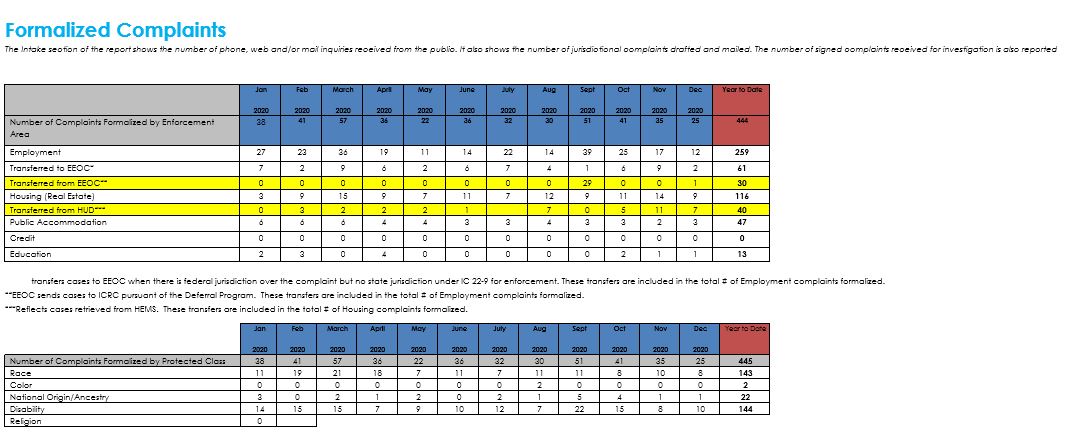
June 25 Follow-up. The Report – “Nashville Human Rights Advisory Committee Recommendation Document ” and an independent assessment are provided below. Reports from the State are also provided at the end of this post. Reports include the Formal Complaints Statewide and Region 9 Inquiries.
Brown County Matters – Facebook Post of the Article. Where is the link to the information (and data) provided in the research? Was this documented in a separate report to the council or just derived from anecdotes? Does the “report” include the data available from the state along with an explanation of the process for managing calls and complaints? Does the “report” include the operational definitions for the data?
Hren: We talked about the human rights ordinance that’s being worked on had one reading. What’s the next step?
Crocker: We were going to do a second reading at the last town council meeting. And in the last hour, a couple of groups that had questions and had initially said they were against it, met with some people, another council person and said, you know what, we’ve kind of reconsidered this. And we kind of would like you to just pause a minute for us to kind of get together and talk about it.
So we’re really, really hopeful that we can talk to them and help them understand how this is a good thing for our community. So we’ll do hopefully, a second reading at the next meeting. And again, this isn’t an emergency. So we’ll do a second reading in the June meeting and then we’ll have a vote on it then. That’s at least the tentative plan at this point.
At last night’s Town Council meeting, a member of DTOI overheard Nashville IN Town Council president Nancy Crocker state aloud: “The folks who are doing the freedom rallies [Don’t Tread On Indiana] approached us about putting this ordinance together.” She was talking about the human rights ordinance.
To be clear, Don’t Tread On Indiana has never contacted any Town Council official advocating in favor of the proposed human rights ordinance. This is because we stand staunchly against it, for reasons that will be elucidated in a future statement.
Why the Nashville Town Council president believes and stated aloud in public that DTOI ever encouraged the construction of this unnecessary and potentially counter-productive initiative is beyond our imagination. That’s a question best asked of Nancy Crocker.
The second reading of the draft was scheduled for May 19, 2022. It was postponed.
Context. The following article distinguishes the difference between tolerance, acceptance, and understanding. Tolerance is a virtue that is a basis for First Amendment protections. Just because you have tolerance for a situation does not mean you accept it. Dialogue can lead to understanding and a higher probability of positive change. Ref: Feb 25, 2014. Psychology Today, by Jefferson M Fish Ph.D. Tolerance, Acceptance, Understanding
Terms
WHEREAS the Town of Nashville recognizes the need for a Human Rights Commission to address issues of bias, discrimination, and prejudice in the community, which has been documented by comments and complaints in the community,by personal testimony, and by reported cases. NOTE: This paragraph was deleted in the current version (July 7, 2022) of the proposed ordinance. The so-called documentation is based on hearsay, anecdotes, and unsupported allegations.
Bigotry is another term linked to Bias, Discrimination, and Prejudice and could include just about anything. What human being is free from bigotry? What would be the criteria for accepting and processing complaints? Categories could include age, gender, appearance, race, culture, heritage, and politics.
Bias. a personal and sometimes unreasoned judgment
Discrimination. unfair treatment of a person or group on the basis of prejudice;
The definition of prejudice includes “harm caused by the adverse preconceptions of others.” Webster’s New World College Dictionary includes a description that: “
The definition of bigotry is prejudice and the state of being intolerant” and
a bigot is a person who is prejudiced, or intolerant of those who are different.”
Independent Assessment – Information provided by the state, BC Democrat, Visitors Center
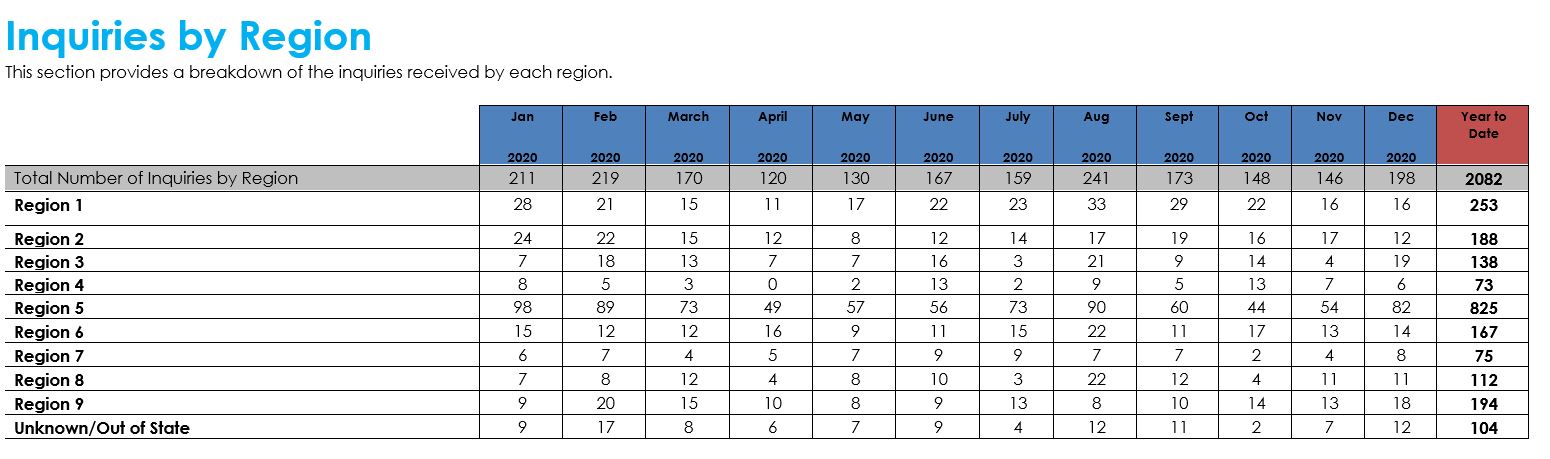
The 8,581 calls to the Indiana Civil Rights Commission is statewide and includes the total number of times their phone rang (calls). The actual number of inquiries statewide was 2,082.
Region 9 consists of 16 counties. Of the 282, “calls”, there were 194 “inquiries.”
The ICRC does not track the region of formalized complaints. Once the complaint is formalized, they only track the protected classes.
The Visitors Center had 6 total complaints in 2020 regarding race…all others were due to accessibility issues. Complaints are given to the respective store owners.
“Personal testimony by shop owners, students and delivery drivers.” Anecdotal.
Rally. Total attendance was estimated at around 100. Does this include law enforcement and security personnel? Were any reports submitted by attendees?
Reports in the Democrat. There were two (2) associated with the school (blackface and yearbook) and one (1) with the local GOP. These were ALL resolved. No laws were broken and no charges were filed.
WHEREAS the Town of Nashville recognizes the need for a Human Rights Commission to address issues of bias, discrimination, and prejudice in the community, which has been documented by comments and complaints in the community, by personal testimony, and by reported cases and;
The Indiana Civil Rights Commission Annual Report of 2020 showed that 8,581 reports were made to the state office. Of those reports, 784 were drafted into complaints and of those complaints, 282 were from Region 9, which includes Brown County.
Should an individual face discrimination, they have the ability to inform the Human Rights Commission, who will then direct the individual to appropriate resources provided by the state.
The committee stated in their recommendation a record of “bias and discrimination” has been documented by the newspaper and by comments and complaints taken at the Visitors Center along with personal testimony by shop owners, students and delivery drivers. A need was also documented based on comments taken from more than 100 people who participated in the Nashville Solidarity Rally in 2020.
Potorti said in November that the town has few — if any — reliable or consistent ways to report or evaluate the quality and treatment of its citizens and visitors. … He said that precedence is already being established locally, like in the Brown County School Corporation which created a district Diversity, Equity and Inclusion (DEI) Committeeof staff members in 2019.
Nov 30, 2021. Human Rights Committee presents findings: Group calls for creation of official town commission to…Abigail Youmans. The Nashville Human Rights Committee has worked for the past nine months to evaluate the need for a town human rights commission. The committee presented its findings to the Nashville Town Council on Nov. 18 and stated that what they discovered showed there is a need for that type of commission locally.
Is there a published report available? Curious about the methodology used to collect the data. Too often, anecdotal information is incorrectly used to determine conclusions and identify “solutions.” Post of the article at Brown County Matters
Jan 27, 2021.Town council OKs human rights advisory committee. The Nashville Town Council is accepting applications through Feb. 17 to form a group of five people to study “the need, function, structure and scope of a Human Rights Commission.”
The council voted 4-1 last week to form a temporary citizens advisory committee on this topic, which will report to the town council after a three-month period with its findings.
Reports provided by the State
The Indiana Civil Rights Commission (ICRC) enforces the civil rights laws of the State of Indiana. We investigate complaints of discrimination and educate organizations, companies, landlords, associations, and individuals on their rights and responsibilities under Indiana Civil Rights Laws. If you feel you have been the victim of discrimination call 1-800-628-2909 or click here to file a complaint electronically.
Fecal contamination from humans and animals is widespread in streams E. coli is an indicator of fecal contamination. While E. coli itself is generally not harmful, many other harmful bacteria and viruses are present in fecal matter. E. coli levels in all the 2020 Lake Monroe samples were well below the state standard of 235 CFU/100 ml (CFU = colony forming units of bacteria).
However, historical beach sampling data shows E. coli exceedances in 2015 and 2016 ranging from 632 CFU/100 ml to >2,400 CFU/100 ml. There were multiple E. coli exceedances in streams throughout the watershed. The South Fork sub-watershed appears to be the largest contributor of E. coli. Source analysis indicates that both human and animal fecal contamination are present. This widespread contamination renders streams unsafe for swimming or wading and contributes to nutrient overloading in the lake. Potential sources include livestock manure, pet waste, wildlife manure, and septic system leachate.
Septic system maintenance and repair can reduce nutrient and bacteria input Poorly functioning septic systems are another potential source of nutrients and bacteria. There are over 9,000 septic systems in the watershed. Many homeowners are unaware that their septic tank should be pumped and inspected about every 3 years. While a properly functioning septic system can be highly effective, another strategy to reduce potential leakage is to expand existing sewer lines and decrease the number of active septic systems.
June 9, 2022. Lake Monroe forums happening
The Friends of Lake Monroe and the Leagues of Women Voters of Bloomington-Monroe County and Brown County will host several community forums to discuss the newly published Lake Monroe Watershed Management Plan.
The Lake Monroe Watershed Management Plan, developed by the Friends of Lake Monroe, is the product of a two-year project gathering and analyzing data about the lake and its watershed. The report summarizes the available data, identifies the top threats to water quality and outlines an action plan to reduce non-point source pollution. Public input is now needed to help prioritize project implementation and to mobilize the community to take action.
The first forum will be held on May 24 from 6:45 to 8:30 p.m. at St. Thomas Lutheran Church, 3800 E. 3rd St. in Bloomington.
The second forum will be held on June 9 from 6:45 p.m. to 8:30 p.m. at the Brown County Public Library, 205 Locust Lane.
The final forum will be held virtually on June 15 during the same time frame. The Zoom link will be sent in advance.
Those interested should visit docs.google.com/forms/d/e/1FAIpQLSfxdfwbSZF9P2SjskNft4U3l9iEfhk7_uan25j5Dl6M1ioFUg/viewform to register. For questions, contact Lake Monroe Watershed Coordinator Maggie Sullivan at watershed@friendsoflakemonroe.org or 812-558-0217.
The full Lake Monroe Watershed Management Plan and a shorter executive summary are available online at friendsoflakemonroe.org/watershed-plan/.
Prayer. The commissioners have included a biblical-based prayer as part of their meeting agenda. Does this imply that the commissioners intend to apply a higher moral standard when making decisions that affect all county citizens? If so, by what method? What feedback is being used to assess results?
Judeo-Christian principles influenced the development of the U.S. Constitution and Bill of Rights. These principles include the beliefs that God is perfect, Jesus is the standard of perfection, and man is imperfect and expected to improve. The aim of the U.S. system of government is to work toward “a more perfect Union.” Meeting this objective requires continuous improvement that results in more needs being met and less harm to people when needs are not met. Consequently, continuous improvement is a moral imperative.
The Preamble U.S. Constitution. We the People of the United States, in Order to form a more perfect Union, establish Justice, insure domestic Tranquility, provide for the common defence, promote the general Welfare, and secure the Blessings of Liberty to ourselves and our Posterity, do ordain and establish this Constitution for the United States of America.
In the context of a Biblical worldview, actions motivated by love result in outcomes where everyone benefits, or at least, is not any worse off in the long term. Meeting this objective requires that you ask “everyone” (aka citizens) how they define “more perfect” (better) and the information they need to assess if change results in improvement.
What’s New? God included variability in his designs. The variation principle states that everyone and everything is unique, one of a kind; no two things are exactly alike. Variation represents the gap or difference between the ideal situation and the actual. An ideal represents a standard of perfection. In the words of legendary football coach Vince Lombardi, although perfection is not attainable, if we chase perfection, we can catch excellence.
Systems determine the majority, if not most, of the outcomes. The County Comprehensive Plan is a key document for identifying what citizens want and do not want regarding economic development and quality of life. The county plan is not current, is only 12 pages, and is deliberately vague. Good arguments can be made for or against a project which invites corruption. A good Plan along with quality leadership would ensure the Plan is aligned with the Budget. A good budget is supported by a usefulfinancial plan as well as a capital improvement plan and budget for county infrastructure. The county has no capital improvement plan and budget. A supporting infrastructure plan is an asset management plan for Fixing Roads and Bridges (limited information available).
How capable are county government systems in meeting the needs and expectations of the citizenry? On a scale of 1 to 5, with 5 being the best, the county would likely be assessed around a 2 (the national average). More info: County and Community Capability Maturity Model.
A method? Continuous improvement can be achieved through a secular as well as non-secular approach. It requires reducing the variation from the ideal.
Christianity. God defines the ideal; God is the moral authority. Everyone can benefit in the long term. More needs are met, and there is less harm to people from needs not being met.
Secular Strategy –Man defines the ideal. In quality management, the Customer defines the ideal and in America, Citizens define the ideal
God’s Insiders – An introduction to the variation principle and its relevance
Avoiding Hypocrisy. If the commissioners continue to include prayer as part of their meeting, they should also be expected to practice what is being preached through the application of better methods. Another option is to offer a prayer before the meeting starts or offer a moment of silence.
Citizen Responsibility. In addition to voting for the best candidates, don’t citizens also have a responsibility to get involved in supporting the needed changes?
Scope. On the scope of the regionalization project (Lake Lemon, Helmbsurg, Bean Blossom, Woodland Lake), Helmsburg will be responsible for contracting for the engineering study to upgrade their current plant to support more customers. They will also be contracting for a “rate study” to identify the amount that can or may be charged to customers. State money can be used to buy down the monthly rates. It has been identified in past meetings that a $65.00- 85.00 a month charge is the preferred range. Helmsburg customers currently pay $92.50 a month for service. With more customers, the hope is that this rate might be reduced.
Purpose of the BCRSD? The BCRSD was established primarily to obtain sewer service for Bean Blossom. Their plans to build a new plant in Bean Blossom failed when they were unable to acquire land and after spending $220,000.
They have now assumed a responsibility to identify a new customer base for Helmsburg. This includes the collection system (lines, lift stations, residential tanks/pumps, etc). They will also contract for the preliminary engineering report (PER) and a “rate study” to identify the monthly charge to customers. The BCRSD will be billing the new customers and will send a consolidated invoice to the Helmsburg RSD. I do not know if the existing Helmsburg customers will also fall under BCRSD in terms of billing.
The engineering studies are needed to identify the requirements and needed capabilities required to get state and federal funding. Both boards received money the county received from the federal American Rescue Plan Act (ARPA) to fund the engineering reports and rate studies.
Constraints on existing Service Providers. With the establishment of the BCRSD, an existing RSD cannot expand its boundaries without BCRSD approval. So now we have two RSDs supporting an area that could be served by one. There has been no discussions by elected officials about transitioning the BCRSD to an advisory-only role. A county wastewater strategic plan has been developed and approved by the BCRSD but not yet been shared via their website, with the public. This plan was intended to identify additional options for wastewater treatment such as “pocket plants.” The state has identified that centralization of management through a BCRSD (regionalization) is “preferable” to boards that can be appointed by elected officials or through a direct vote by the customers.
Centralization of power can be an impediment to providing the best services. Power corrupts. BCRSD is a case in point. Do their potential customers need and support sewer service? Do the customers agree on the criteria (age of homes, lack of records in the health department) that have been used to declare that their septic systems are failing? The BCRSD can mandate hook-ups. The HRSD has made this optional.
The existing RSDs and Nashville that provide wastewater treatment services, do not need a County RSD in order to provide service to customers. The HRSD service area could be expanded to include Lake Lemon and Bean Blossom. The HRSD could then develop a complete package designed in phases and submit for funding. Helmsburg and Lake Lemon have documented “needs.” Lake Lemon residents do support services and have a valid need, e.g., failing systems in flooding conditions. The HRSD could also expand its board to include a representative from Lake Lemon and Bean Blossom. A follow on phase could include serving an expanded area in Bean Blossom for those requesting service and assuming that the required easements can be obtained.
The BCRSD identified an expanded area for service in Bean Blossom that extends out to the Woodland Lake area and as north as Freeman Ridge. They have stated they will need 190 easements that based on the lack of a documented need, may be difficult to acquire. The current need is based on speculation regarding the age of homes and the lack of records in the health department. Any waivers that can be granted are only temporary. Water studies may indicate that “some” septic systems may be failing. If so, the next step is to identify the source and mitigation strategies.
Development through Expansion of Sewers. The core leadership of the local republican party (led by realtors), along with the commissioners and council support “development” through expansion of sewers as a desired outcome, e.g., a “want” in the county and particularly in Bean Blossom. The County Comprehensive Plan does not identify an expansion of sewers in the county as a desired strategy. The comprehensive plan should represent the “voice” of the citizens regarding what they want and do not want in terms of services and development
The BCRSD supports this agenda. No analysis has been done on the long-term financial sustainability of expanding sewers in areas without a need. Nashville has identified that the town’s customer base cannot sustain infrastructure costs – including sewer and water. The maintenance costs of infrastructure tend to continually rise and with a projected decline in the county population, fewer people will be paying the higher costs adding to the increasing cost of living in Brown County that can further contribute to gentrification.
Tourism Update. A new report from Rockport Analytics was presented by the CVB. All is well.
o. Tourism is always framed as a “major industry” in Brown County. Per the 2020 Report, tourism brings in $12.1 million in wages. The MAJOR INDUSTRY in Brown County in terms of economics is as a “bedroom/retirement community.” This includes people that choose county living but derive their income from outside the county via jobs in other counties, working from home, retirement or investment income. This demographic also supports Brown County businesses. The Total Adjusted Gross Income (AGI) – of county citizens that filed tax returns was over $424 million in 2019. The county is primarily funded by income and property tax. The “State” is primarily funded by income tax and sales tax (thus the support for tourism via an innkeepers tax). An economic and cultural risk to the county is over-tourism. The Gatlinburg-light vision for tourism along with high-density apartments by many can kill the proverbial golden goose.
Veterans Officer – Chris Snell. The Veterans Officer received approval to establish two non-reverting funds. The intent is to raise money through donations and grants for transportation and financial assistance for veterans. Kudos to Chris.
Information Technology (IT) Services. Ric Fox is retiring. Rick spent 15 years with the school system and 10 with the county. He wore a lot of different hats from IT to maintenance. A lot of technological chnges -during this time. The county is in the process of hiring a new IT manager and reviewing requirements related to cyber-security. The school system also has a small staff (3) of IT professionals. It’s a shame that the county leadership does not do a better job of including the missions and functions of the various departments on the county website to recognize the contributions of county employees. High School interns could help write the narratives.
Zoning Decision by the Commissioners. Melanie Voland provided an excellent presentation requesting a reconsideration of zoning for the 24 acres from Residential to Commercial. She made a passionate, knowledgable, and insightful case on the importance of considering residents and quality of life over commercial interests. Her vision which would likely be shared by most citizens should be included in future updates to the County Comprehensive Plan. The current plan was deliberately kept at a level of detail where a good argument could be made for or against a project. This invites corruption into the decision-making process.
Commissioners were not persuaded and reconfirmed their vote. There are restrictions on the zoning to limit development to no more than 5 residential units. However, it’s unclear if other commercial properties can be put on the property. The intent of the property is for tourist rentals. The local landowner asking for the change was referenced by his first name by commissioners Biddle and Pittman. The new owners live out of state.
The Area Plan Commission (APC) voted to recommend a No vote on the change. APC consists of 5 members – 4 voted No and one abstained. Dave Hardin abstained which is normal – he does many of the surveys on the properties being discussed.
The residents opposing the change did not attend the meeting where the commissioners approved the change. Melanie Voland was not aware of the meeting date and time. Given the No vote by the APC, residents may have believed the commissioners were following the recommendations of their appointed officials. It is rare when they do not.
According to the Barna Group, a SAGE Con is a Spiritually Active Governance Engaged Conservative. The word SAGE Con, I discovered, is an acrostic used to describe individuals who are conservative in their Christian faith, active in pursuit of a closer relationship with Christ, and passionate about the state of our social, political, and moral values.
Recent research conducted by the Barna Group concluded that “nearly all SAGE Cons (99%) think the United States is going in the wrong direction.”
Ron Sanders defeated incumbent Diana Biddle in the 2022 Republican primary. His opponent in the General Election is Democrat candidate; Stephanie Kritzer and possibly an independent candidate (s).
Stephanie Kritzer: “I believe that we want to have our young people coming back to Brown County and in order to do that we must provide good schools. We must add infrastructure for Wi-Fi and internet so that people can work from Brown County if they need to and that our students can get that. That’s one area that I think is very important. Of course, everyone is concerned about roads and I think we need to take a look at how we’re dispensing those funds and what else we can do to serve people of Brown County.”
Ron Sanders: Top priorities as detailed in advertisements are a “well-funded” sheriff department, and wellness checks on the elderly and at-risk youth.
Sanders is opposed to TIF — tax increment financing — with one of his first advertisements stating “keep the tax dollars for the people who paid them.”
One of his main platforms was he wants to sell the Brown County Music Center, saying that “people are not happy with it.” …. “Make millions on the sale and save millions on interest, put it on the tax roll and make millions more,” one of his ads states.
“Use money from the sale to fix roads and help fund the sheriff’s department and any other programs that need funding, pay on outstanding loans and save taxpayers’ money … We all have a stake in seeing Brown County succeed.”
Political Context
There are three primary special interest groups and advocacies in the county that influence spending, economics, and the culture:
Development through expansion of sewers. This included areas such as Bean Blossom where a need has not been documented or requested by the majority of residents to be served. Advocates are the leadership of the local Republican Party (realtors) and some of their elected and appointed officials. (Note: Helmsburg and Lake Lemon area residents have identified a valid need and support expansion.)
Development can lead to “gentrification” where the more affluent displace those more at the low to moderate-income level. This is more apparent with housing prices and the income trends that indicate that the trend of those with incomes over 50K is increasing and those under 50K are decreasing.
The Brown County Regional Sewer District (BCRSD) was developed to support a new sewer plant in Bean Blossom. This is no longer a viable option – service can be provided by the Helmsburg RSD. Should the BCRSD be transitioned to an advisory committee?
County Government Employees – Pay, benefits, working conditions. Includes school employees whose leadership has requested additional property taxes via referendums.
Not Represented – The Golden Goose. The 80%+ of citizens who generate the taxable revenue that funds the county government through income and property taxes. Should this group establish and fund its own Political Action Committee (PAC) in order to get adequate representation?
County Comprehensive Plan. The commissioners are responsible for the plan. The County’s 12-page comprehensive plan meets the “minimum” requirements required by the State to manage zoning. The plan should clearly identify what people want and do not want. The current plan was deliberately designed to be general and vague. Good arguments can be made for or against a project. Final decisions can be determined by who you know. Will you support the development of a new plan and ensure that the desires of the citizens, and not just the special interests, will be represented?
Apr/May 2022. Jail Costs. Over 700K of infrastructure costs for the Jail have also been identified and shared with the commissioners and county council.
In the past, the commissioners have refused to develop a capital improvement plan and budget. Recently, the Council under new leadership has reinforced the need for the county to develop a plan to identify priorities and a source of funding. Will you support the development of the plan and future refinements?
Wellness Checks. This is supported by TRIAD. What more is needed?
At-Risk Youth – What is the problem? What are the current programs?
Sell the Brown County Music Center (BCMC)
There has been community opposition to a “government-owned and managed” music venue. This project was led by the tourism industry. Despite assurance to the contrary, the Commissioners and County Council did not hold public meetings to solicit citizen input on the desirability of this venue. Their only meetings were to vote to approve.
The Music Center cost over $12.5 million dollars. Revenue from the Innkeepers tax is the collateral. What is the market value for this venue? What if it can not be sold at a “profit”? Note if sold at a loss, the Bank will still be collecting revenue from the innkeeper’s tax until their debt is eliminated.
Note: Gov Mitch Daniels sold the Indiana Toll Road (a government asset) and invested the money into roads.
Maple Leaf (BCMC) Management Group. Diana Biddle is the current commissioner representative on the committee. Is the BCMC financially viable in the long-term? Is an independent and objective assessment of the financial viability of this venue and the risk to taxpayers needed?
Lower Debt and Taxes. The county is on track to pay off the $3 million dollar loan that is being used to pay operational expenses (spending exceeded budget) and infrastructure costs. The county routinely renews this debt which maintains existing taxes as opposed to cutting them. Should this practice of renewing a loan be continued? What are the decision criteria?
Aug 24, 2021. County OKs borrowing for roads, other projects By Suzannah Couch. After multiple meetings and comments, the Brown County Council approved an ordinance last week allowing the county to take out a $3 million bond to pay for various projects and road work over the next three years.
BC Schools Referendums. The tax increases are a result of these referendums that are set to expire. BC Schools have indicated its desire to initiate new referendums and maybe increase the tax rate. Did/does the school’s justification and assessment of pros and cons justify continuing the tax (s)?
Tax Increment Financing (TIF). This is a Town of Nashville strategy. An increase in taxes as a result of development goes to Nashville and not the county. What is the county’s role if any, in approving or rejecting? Is input from the Planning Office, Auditor, and Assessor required?
County Comprehensive “Financial” Plan. The Financial Plan, Annual Budget, and a Capital Improvement Plan and Budget (To be developed) provide the information needed to manage the county’s finances.
The critical weakness in financial planning is the lack of trend data on revenues and expenses. The county has focused on “one year at a time.” New leadership on the council is looking at the longer-term estimates and projections. Right now, the data presented in the Financial Plan is not linked to the accounting software.
MISC POSTS
May 9, 2022. BC Refreshed – Facebook Post – Ron Sanders is not supported by the local Republican party leadership led by Mark Bowman and Robyn Bowman. Their teenage son serves as an intern (part-time, computer technician) in the county government for a salary of $6,321.00 (Ref: Employee Compensation by Unit.)
Ron Sanders Ronald Sanders for commissioner, 812 988 8424, it’s just a few at the top of the party, they are just making their selves look bad, l want to fix the roads and lower our debt and taxes, isn’t that what the Republicans say they always want, l just want to serve all the people, not just a few at the top,a few at the top are just mad because I didn’t take the knee and I will not now just to win, if the people of this county want me as their Commissioner their little act of trying to hold on to power will be in vain, power to the people.



 Commissioner Meeting: May 18, 2022. 2:00 p.m.
 Independent Voters of Brown County IN