U.S. Modern Monetary Policy (MMT)

The “So What?” at the local level?   National policy effects state and county budgets.

How Can the US Keep a Trillion Dollar Debt?

  • “As a reminder, MMT argues that sovereign governments with their own currency can’t go broke and can spend until inflation becomes an issue.” (1)
  • To condense the argument: Taxes are not about raising revenue for the government. They’re to reduce spending power to avoid price inflation. (1)
  • “Consider the Atlanta Fed’s wage-growth tracker for prime-age U.S. workers, currently at 3.9%. It bottomed out at a record low 1.6% at the end of 2010, down from 4.2% before the recession began. It didn’t reach 3% for another four years and still hasn’t reached the levels seen from 1999 through 2001.” (1) 
  • The Peterson Foundation, one of the last voices calling for fiscal restraint, bemoaned the budget deal: “Another $400 billion in debt is the worst possible holiday gift for our children,” the group said. “We should be looking at ways to reduce our interest burden so that we can fund important national priorities.” (1)
  • Kelton points to Japan, which is running a debt-to-GDP ratio of about 238% with low inflation and interest rates locked near zero, as an example of failing conventional wisdom.  (1)
  • None other than Ray Dalio, founder of Bridgewater Associates, has said he sees MMT as “inevitable.” Policymakers, he says, have to figure out “how to get the economic machine to produce economic well-being for most people” when typical central-bank tools fail. He sees a coordination of fiscal and monetary policy as the only answer. (1)

(1) Dec 23, 2019. Bloomberg, America Turns From Tea Party to MMT in a Decade  The winds of economic thought have shifted drastically heading into the 2020s.  By  Brian Chappatta 

  • Since August 2011, the U.S. public debt has increased by almost $9 trillion, to $23 trillion, and virtually no one has batted an eye …
  • Randall Wray, a senior scholar at the Levy Economics Institute of Bard College and a leading thinker in Modern Monetary Theory. (MMT)   “We do not have to repay the debt — what we have to do is make the interest payments.”
  • None other than Ray Dalio, founder of Bridgewater Associates, has said he sees MMT as “inevitable.”

(2) The Federal Reserve Is Directly Monetizing US Debt In a very real way, MMT is already here  by Chris Martenson Friday, November 15, 2019

  • At a time, mind you, when US fiscal deficits are exploding and foreign buyers are heading for the exits.
  • It’s now clear that something spooked the Fed badly in September. … We still don’t know what exactly went on, but the Repo market blew up. While this was a clear sign that something big was amiss, the Fed has not yet explained what the cause was, who needed to be bailed out, or why.
  • Given all the secrecy, obfuscation and lies, the Fed is now in clear violation of the spirit of the Federal Reserve Act of 1913.
  • The debate over whether or not MMT (“Modern Monetary Theory” see here for background and discussion) should or should not happen is now moot. It’s already here.
  • This is a very serious and extremely important conversation to have. But it’s not being had at all.

Ray Dalio Warns A “New Paradigm” Is Coming (Old paradigm 1919-2019)

  • Identify the paradigm you’re in, examine if and how it is unsustainable, and visualize how the paradigm shift will transpire when that which is unsustainable stops. – Ray Dalio
  • Ray Dalio  – Articles  posted on LinkedIn  

Appointments made to boards, commissions

Feb 21, 2020. BCD. Residents appointed to boards, commissions for 2020 By Staff Reports

Feb 5, 2019. Brown County Democrat – Appointments

The following people have been appointed to serve on town and county boards and commissions for 2019 or beyond. The agency or person who appointed them or the agency or office they represent is in parentheses.

Election Board: Amy Kelso (D), Mark Williams (R).

Brown County Alcoholic Beverage Commission: Jim Hays (Nashville Town Council), Jeff Deckard (Brown County Council), Duane Parsons (Brown County Commissioners)

Brown County Animal Control Commission: Red Nastoff (town council); John Price (county council); Sue Ann Werling (Brown County Humane Society); Heidi Duncan, Patti Fleetwood, Richard Wood (commissioners)

Brown County Area Plan Commission: Jane Gore (town council); Carol Bowden (Brown County Schools Board of Trustees); Dave Harden, Russ Herndon, Deborah Bartes (commissioners); Randy Jones (county council); one open seat to be appointed by Purdue Extension Service

Brown County Board of Zoning Appeals: “Buzz” King (town council); Deborah Bartes, Darla Brown, John Dillberger (commissioners); Jane Gore (Brown County Area Plan Commission)

Brown County Community Corrections Advisory Board: Anna Hofstetter (town council); Bill Hamilton (county council); Mary Wertz (judge); Jacob Moore (public defender); John Dauterman (director of Office of Family and Children); Jennifer Acton (chief probation officer); Scott Southerland (sheriff); Ted Adams (prosecutor); Frank Nardi (magistrate); Christy Wrightsman (education administrator); Donald Lee Barriger Jr., Diana Biddle, Debbie Goodrich, Stephanie Yager (laypeople); Dean Henderson (ex-offender); Amanda Kinnaird (mental health administrator); Erin Kirchhofer (victim’s advocate)

Brown County Emergency Management Advisory Committee: Diana Biddle (commissioners); Glenda Stogsdill (county council); Brad Stogsdill (law enforcement); Chris Henderson (chair, EMS); Corey Frost (public health); Jennifer Heller, Joe Tenbarge (at-large members); Mike Magner (public works); Nick Kelp (fire); Laura Hammack (schools); Ben Seastrom (town council)

Brown County Solid Waste Management District Board: Nancy Crocker, Alisha Gredy (town council); Dave Anderson, Diana Biddle, Jerry Pittman (commissioners); Darren Byrd (county council); Jim Wray (Cordry-Sweetwater Conservancy District)

Local Emergency Planning Committee: Kim Robinson (community partner), Ben Seastrom (town council), Maria Carrasquillo (Red Cross), Chris Henderson (EMS), Corey Frost (chair, public health), Susan Armstrong (EMA), Diana Biddle (commissioner), county council appointment yet to be filled, Jennifer Heller (public health), Mike Magner (public works), Nick Kelp (fire)

Brown County Board of Health: Cathy Rountree, Dr. Michael Day, Linda Bauer, William Irvine, Jeff Cambridge, Thomi Elmore, Cynthia Rose Wolpert (commissioners)

Helmsburg Regional Sewer Board: Jenny Austin, Denise Broussard, Harrietta Weddle (commissioners)

Gnaw Bone Regional Sewer Board: Charley White, David Hess, Shawn Fosnight (commissioners)

Property Tax Assessment Board of Appeals (PTABOA): Linda Bauer, Robyn Bowman (commissioners), Judy Wright Simpson (county council)

Brown County Redevelopment Commission: Jim Schultz, Jim Kemp (county council); Terry Foy, Justin Schwenk, Jerry Pittman (commissioners); Stephanie Kritzer (school board), non-voting member

Brown County Convention and Visitors Commission: Derek Clifford, Barry Herring (commissioners); Kevin Ault, Patty Frensemeier, Mike Patrick (county council)

Brown County Library Board: Tim Kelley, Robert Gustin (county council); Jan Greenlee, Kathleen Roberts (commissioners)

Brown County Regional Sewer District: Debbie Larsh, Mike Leggins, Clint Studabaker (county council); Phil Leblanc (commissioners); one open seat to be appointed by the county council

Brown County Parks and Recreation Board: Jim Hahn (commissioners); Jay Sichting, Linda Hobbs (judge); Richard Gist, Keith Baker (county council); one open seat for Purdue Extension educator

Hamblen Township Fire District Board: Tim Williams, Michael O’Neil, Roy Shea (commissioners)

Public Defender Board: Ruth Johnson (commissioners); Rick Kelley, Michael O’Neil (judge)

Maple Leaf Management Group: Darren Byrd (county council); Diana Biddle (commissioners); Kevin Ault, Barry Herring (CVC); Jim Schultz, Mike Lafferty (Maple Leaf Management); Bruce Gould (Brown County Convention and Visitors Bureau)

Nashville Arts and Entertainment Commission: Jessica George, Jayme Hood, Melanie Voland, Chuck Wills (town council, through 2021) Jonathan Bolte, Anabel Hopkins, Cathy Martin, Heather Nicholson, Michele Wedel (town council, through 2019)

Nashville Development Review Commission: Bruce Gould (town clerk-treasurer); Jessica George, Welton Harris II, Alex Miller, Penny Scroggins (town council); David Martin (town council president); Greg Fox (Brown County Chamber of Commerce); Mike Patrick (CVB); one open seat to be appointed by Nashville Redevelopment Commission.

Nashville Metropolitan Police Merit Commission: Dave Derbyshire, Jim Hays, Ken Wendling (town council); Tom Crawford, Glenda Johnson (police department)

Nashville Parking and Public Facilities Corporation (“food and beverage commission”): David Chilcote, Gloria Dobbs, Matt Gray, Anders Jorgensen, Penny Scroggins (town council)

Nashville Redevelopment Commission: Jane Gore, Dan Snow (town council); Roger Kelso, Raymond Modglin, Torrie Rae Birkemeier (town council president); Carol Bowden (school board), non-voting member

Nashville Town Park Commission: Alisha Gredy, Anna Hofstetter, Alexis Peirce Caudell, Mark Shields, Melanie Voland (town council)

Nashville Tree Board: Bruce Gould, Cathy Paradise, Rick Patrick, Mark Shields, Allison Shoaf (town council)

Book: Declaration of Independents

Book: Declaration of Independents:  How We Can Break the Two-Party Stranglehold and Restore the American Dream by Greg Orman

In 2014, Greg Orman made headlines withhis historic Independent run for the U.S. Senate in Kansas. Voters gravitated to Orman’s campaign in unprecedented numbers, challenging the entrenched dominance of the two major parties over American politics.

Supporting Initiatives:


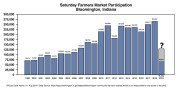
Bloomington, IN Farmers’ Market – Controversy – Summary

Bloomington, Indiana Farmers’ Market
Summary of Key Events
by Tim J. Clark

Background.  After nine years of participating in the Bloomington, Indiana Farmers Market, owners of Schooner Creek Farm (SCF) – a small family run business, are alleged to be white supremacists.  A petition was started to remove them from participating in the Market that is managed by the City of Bloomington, IN.  The controversy has received state and national media coverage.

Official Statement – Bloomington Farmers’ Market Market

The City’s response to the allegations:   “To our knowledge, this vendor has not shared these views at Market and has treated customers with respect,” said Marcia Veldman, program/facility coordinator for Bloomington’s Parks and Recreation Department.  The City is constitutionally prohibited from discriminating against someone because of their belief system, no matter how abhorrent those views may be. The City may only intercede if an individual’s actions violate the safety and human rights of others.”

 Allegations associated with the owners of Schooner Creek Farm

Aug 3, 2019. (Bloomington) Herald-Times  Commentary: Don’t forget the First Amendment, By Laura Lane

“The Herald-Times has published multiple articles on the farmers’ market developments. We have done our own research. We have reviewed court documents, emails, videos and recordings that so many claim is proof that the owners of Schooner Creek Farm are white supremacists. Direct evidence, it isn’t there.  … When a news organization publishes a false statement that damages a person’s reputation, that’s libel. I make sure, just about every day, to not libel anyone. Not just because I could be sued, but because it’s important that the information we report be accurate. We cannot and do not print accusations that can’t backed up with tangible stand-up-in-court proof. ”

Aug 2, 2019. WFIU – Noon Edition  – Panel Discussion. Steve Sanders – Associate Professor – IU Maurer School of Law, WFIU Noon Addition, Panel Discussion, Follow-up Comments

In response to owners of SCF’s association with Identity Evropa:  “My point was that affiliations and linkages can be ambiguous and that it is irresponsible to use them to imply the worst possible meaning in the absence of proof of exactly what someone believes or seeks to accomplish. I’m a Democrat, but that doesn’t mean I automatically embrace what every leader of the party stands for.  So in short, there is good evidence Sarah Dye has done things to affiliate herself with white supremacist groups, but the meaning of that affiliation for her, and the exact nature and contours of her own beliefs and agenda are what remains unknown.”  

Allegations – American Identity Movement (AIM

In March 2019, Identity Evropa was disbanded and the American Identity Movement (AIM) was established.

The Anti-Defamation League (ADL) claims  the American Identity Movement (AIM) is an alt-right white supremacist group. The Southern Poverty Law Center has made similar claims.

AIM disputes these allegations. “The American Identity Movement believes in effecting change peacefully and lawfully, and rejects political violence, extremism, and supremacism in all of its forms.”  Reference: AIM Website

Bloomington Winter Farmers Market – Dec 2019-March 2020

The Bloomington Winter Farmers Market is a project of the Center for Sustainable Living (CSL) a 501c3.  The Market leases a venue from the city and can choose to exclude (discriminate against) a vendor for their personal beliefs.  SCF has participated in the Winter Market for five years and is not allowed to participate in this years market.

  • The definition of bigotry is prejudice and the state of being intolerant. A bigot is a person who is prejudiced, or intolerant of those who are different. QUESTION: Does the Center for Sustainable Living consider bigotry to be sustainable?

Additional Information:  More detail on context, history, current events, media coverage, notes,  et.al.  are available at the following post:   Wanted: Tolerance, Understanding, Collaboration, Progress

Local Food – Innovations

IU Center for Rural Engagement

IU Community Food Systems – Includes BC Fact Sheet

Sustaining Hoosier Communities (SHC) – Request for Proposals
shc-request-for-proposals

Jan 30, 2020. Regional Conference.

  • Join us for this regional event with an incredible line-up of speakers and strategy sessions to help build a thriving regional food system in South-Central Indiana!
  •  Strategy sessions include:
    • Business and economic development in the food system
    • Shared-use kitchens and meat processing infrastructure for farm and food businesses
    • Indiana Grown for Schools
    • Value chain coordination and creating networks of connectivity
    • Community and nonprofit innovations for markets and food councils
    • Agritourism for the Indiana Uplands

IndyStar:  Indiana farmer to be featured on new season of ‘Returning the Favor’ with Mike Rowe

RTV6 – School bus retrofitted into mobile food pantry  A new mobile food pantry in Indianapolis will bring food to those who need it most.

IndyStar:  Why some farmers are banking on you buying more expensive food


Bean Blossom Sewer Project – Key Points

Updated Dec 19, 2019

Summary of Key Points:  Supporting details for these points are provided in the following post:  Regional Sewer Board – Bean Blossom Sewer Project – For the Record

Transfer of Parkland for a Sewer Plant  –  Request for Special Exception  

Dec 19, 2019. BCD. Vote taken on Bean Blossom sewer plant land By Sara Clifford. A sewer plant to serve Bean Blossom is now allowed to go on land at the base of Bean Blossom hill off State Road 135 North.

Parks and Rec still have to hold a public meeting and vote on a transfer. If this parcel was developed as parkland (biking, hiking, picnicking, etc.), the sewer plant takes up some prime space. Other options for sewer service include Bean Blossom and maybe Helmsburg (depending on study results).  But when the project manager and board member (Clint Studabaker) is already talking about the view from his office, on the number of employees needed and the BCRSD with the commissioner and council support has spent $200K on plans without acquiring land, the pressure is for “New.”

Dec 10, 2019. Email sent to Parks and Rec Board. 20191210 – Email Parks and Rec – Land Transfer requesting that any decision on a transfer and rezoning of land donated and deeded to Parks and Rec bepostponed until two ongoing studies have been completed.

Nov 26, 2019. Facebook Post on the topic asking the question: Should land deeded to Parks and Rec be used for a sewer plant if other land is available? 

TimelineParkland for Sewers.   Recent events  regarding the acquisition of land donated to Parks and Recreation:

Example Public Input Meeting – Park Master Plan – Johnson County 

    • July 30 — present?  A commissioner, a councilman and others (?) started putting pressure on some Parks and Rec board members regarding their decision to rescind their vote. 
  • Nov 5, 2019. The Brown County Regional Sewer District Board (BCRSD) had an executive session (closed meeting) with the Park and Rec Board to talk about land acquisition.  
  • Nov 12, 2019. BCRSD Board Meeting –  I asked for an update regarding current actions to acquire land from either a private owner or land deeded to Parks and Rec.  The board was vague on the response and did not rule out looking for private land.
    • Note: Land is available in Helmsburg for a new plant.
  • Nov 18, 2019. The BCRSD Board sent a follow-up letter to the Parks and Rec Board that identified their intent to acquire land deeded to Parks and Rec.
    • BCRSD Letter  to the Parks and Rec Board
    • Nov 20, 2019.  Parks and Rec Board Meeting.  The discussion on the topic of a land transfer was not identified on the meeting agenda.  The BCRSD Board members attended the meeting, requested and received a signed agreement that Parks and Rec might consider a transfer.
  • Nov 21, 2019. An executive session (closed meeting) has been scheduled between the BCRSD Board and the Parks and Rec Board.
  • Dec 3, 2019. BCD, Town OKs major study of sewer service By Sara Clifford
    • Includes considering providing service to Bean Blossom.
  • Future Meetings
    • Dec 10, 2019. BCRSD Board Meeting. (second Tuesday of the month).
    • Dec 12, 2019. BCRSD and Parks and Rec Board – “executive session”  to discuss “land acquisition”.
    • DEC 18, 2019.  BZA (special exception) Meeting – Agenda item for a special exception for a transfer – APPROVED.
      • My statement requesting a delay on the decision for a “Special Exception” 20191218 Special Exception Parkland – AAR
        • Three members of the BCRSD Board made a presentation on the alleged need and history of the project, two Park and Rec Board members spoke in support, Jerry Pittman representing the commissioners spoke in support.
      • Dec 18, 2019 – Parks and Rec Meeting – No quorum
      • Jan 31, 2019 — Regionalization Study  To be Complete -will help determine the best options and locations for a plant – Helmsburg, Bean Blossom, Other …

Summary of Key Points

A needed regionalization study was initiated in “August of 2019” (better late than never) – to help identify the best solutions for the region (area). It is due to be completed by mid to late January.  Responsible governmental oversight and due diligence should mandate that no further action be taken on the Bean Blossom project until this report has been completed, presented, studied, and reviewed by all of the pertinent parties involved to include Sewer boards, County Council and relevant property owners.

The land being considered for a wastewater plant was donated to Parks and Recreation – NOT the county where elected representatives can decide on best use.  Although perhaps legal, is the transfer honorable?  Does it violate the intent of the donation?  Would this decision send a clear message for individuals and groups to never donate land to the government?

The desire by the Brown County Regional Sewer District (BCRSD) board to acquire land at deeded to Parks and Recreation and conveying a false sense of urgency, appears to be an act of desperation. It may also be a face-saving measure for council members and commissioners that have supported the funding for this project without understanding the extent and scope of the problem.

  • Should John Kennard, a Health Department employee and member of the Parks and Rec Board, recuse himself from any vote on a transfer due to a conflict of interest? As a county employee, he was involved in establishing an RSD in Bean Blossom. He also made allegation at the Nov 20 meeting regarding the conditions of the Nashville Plant.
  • Mike Leggins, President of the BCRSD board misrepresented the intent of the Helmsburg RSD Board regarding a new or expanded plant.  Helmsburg’s application for the regionalization study grant identifies their interest regarding expansion.

Motivation.  The long-term motivation for sewer service in Bean Blossom has been supported by individuals with property in the area that can be developed and business interests. Business interests include the trailer park and Bill Monroe Music Park and Campground.  Commissioner Biddle who lives in the area to be served, also mentioned in a public meeting that her residential septic system was inadequate. The current Board President (2018/2019) has also acknowledged his business interest in obtaining sewer service for the area.  The current president of the current Redevelopment Commissions (RDC) has also expressed public support for this project and commercial development in the area.  The prior RDC Commission identified Helmsburg as a viable option.

Project – Re-start. The BCRSD – Bean Blossom Sewer Project was announced at a public meeting in “June 2018” at which time they announced they were submitting a preliminary Engineering Report (PER) to the state.  Early estimates were that the project would be approved within a year.  Their failure to acquire land due to lack of support by one or more property owners has resulted in delays.

Budget.  BCRSD received $270,000 from the county council in the fall of 2018 to help cover the cost of engineering reports and other project-related expenses. To my knowledge, AT NO TIME during the first year of the project did the BCRSD board identify to the Council in a public meeting that they were having trouble acquiring land.  The current budget balance as of Nov 8, 2019 is approximately $84,356.60.

  • Incurring a significant expense ($186, 643) by the BCRSD without first acquiring land should be of concern to county citizens.  The performance of the current BCRSD board should also be reviewed.

Monthly Costs of Service.  Due to the concern of Helmsburg RSD (HRSD) customers on their high monthly rate of  ($92.50) of service and the request by potential customers in the Lake Lemon area for sewer service from Helmsburg, the State-funded a grant to develop a regionalizations study.  The application for the study that included HRSD and BCRSD specific requirements, is intended to help identify the best wastewater treatment options for the region (area). This study is estimated to be completed by mid to late January of 2020.

  • Population density – the less population and customers, the higher the costs. On monthy fees, Helmsburg is at the high end ($92.50) and Gnaw Bone on the lower end – approximately $50.00.  The Forest Hills Apartment complex in Gnaw Bone added more customers and helped keep the costs down.  In Bean Blossom, what is the projected maintenance costs over time and what is the expected growth in the customer base?  What is the projection for the monthly charge for service?

History on Options Considered. Under the previous BCRSD Board President – Judy Swift Powdrill (2017/2018), the Board voted to continue negotiations with Nashville to obtain service. Nashville rescinded the offer. The BCRSD Board decision in 2017 -when  Evan Werling was President, was to reject the Nashville option due to the higher costs and annexation related requirements.  This BCRSD Board along with the support of the 2017 Redevelopment Commission (RDC) identified that expanding the Helmsburg plant may be the most cost-effective option. The current BCRSD Board requested service from Nashville and per the Town Council President, Nashville has not said no to the request.

    • The HRSD board identified the requirement that additional debt would not be passed on to current Helmsburg customers. This was the same requirement specified by the Gnaw Bone RSD when an expansion was required and approved to support the Forest Hills Apartment complex.  The developer assumed the additional costs of the expansion.

Existing Plans for Development. Helmsburg developed a county approved Economic Development Area (EDA and an Economic Plan.  Bean Blossom has neither.

Proven Need. Final approval of the Bean Blossom project by state and federal officials will require that the BCRSD validate a need. The past two BCRSD Board Presidents both stated publicly that there is no documented evidence of failed systems in the area . They both recommended validation of a need before proceeding with the project.  The current board appeares to be making a case based on the age of systems in the area to be served and inadequate records.

Eminent Domain. As was communicated to the Park and Rec Board, the BCRSD can evoke eminent domain to acquire land for a public good.  If an eminent domain action was challenged by a private property owner in court, the BCRSD may have to prove that there is a need. This may be difficult to establish to the satisfaction of the court.

Estimated useful Life. Speculation by the current BCRSD of a need is based on the estimated useful life of systems as an average of 25 years. This average can identify a range from 1 – 49 years.  At the Brown County Septic Summit in September, it was identified that the life of a system was “indefinite.”  Indefinite defined as: “not definite, unclear; vague, lacking precise limits.”

    • The are many variables that factor into an estimate of useful life. These include type, design, age, water usage, maintenance, and soil types to name a few. Note that the “indefinite” conclusion is supported by the EPA and Presby systems.
    • The Cordy Sweetwater Conservancy has the highest density of homes in the county that is served by septic systems.  Routine and recurring tests of water quality of the lakes identify no serious problems with water quality.

Water Quality.  County public officials have made allegations that failed systems are contributing to E-Coli in the creeks and streams. This is not proven.  The  State Department of Health identified that there are no approved processes at this time for sampling water and determining if there are human contaminants.  Any statement made contrary to this truth is “Fake News.”

“IF” it is determined that water from lakes and streams is being polluted by human contaminates, then additional research and analysis will be needed to determine the origin, extent, and scope of the problem.

More information:

Aug 27, 2019. Brown County Democrat. Guest Opinion: Septics and Sewers – major changes proposed By Tim J. Clark

Jan 22, 2019. Brown County Democrat. GUEST OPINION: Sewers and septic systems: What’s the problem? by Tim Clark

Jan 7. 2019.  FAQ Brown County Regional Sewer District (BCRSD) Board  – Response in January 2019 to questions that were asked at the June 2018 BCRSD Meeting.

Part 3 – Discord in the community – better strategies needed?

Part 3:  Discord in the community – better strategies needed?
By Tim J. Clark
Updated Nov 5, 2019

Background: An ongoing assessment of the issues with the Bloomington Farmers’ Market.

Last year for the Bloomington Farmers’ Market? 

Saturday’s (Nov 2, 2019) “circus” at the Market sponsored by the “Purple Shirt Brigade” with support from No Space for Hate and witnessed by the city’s attorney was interesting.

The situation with the market does raise a question:  Are the policies and actions regarding protests creating and supporting the conditions that will lead to a  justification to permanently close the market?   The protestors are currently targeting a specific vendor – Schooner Creek Farm, and the city claims that given the constraints of the First Amendment, they are powerless to stop it.

Regarding the protestors allegations that the vendor is a white supremacist, Laura Lane of the Herald-Times in her August 3, 2019 Commentary: Don’t forget the First Amendment, stated the following:

  • The Herald-Times has published multiple articles on the farmers’ market developments. We have done our own research. We have reviewed court documents, emails, videos and recordings that so many claim is proof that the owners of Schooner Creek Farm are white supremacists. Direct evidence, it isn’t there.
  • When a news organization publishes a false statement that damages a person’s reputation, that’s libel. I make sure, just about every day, to not libel anyone. Not just because I could be sued, but because it’s important that the information we report be accurate. We cannot and do not print accusations that can’t backed up with tangible stand-up-in-court proof.

The city’s current policies on protests and lack of enforcement of  “rules” introduces a significant change.   In effect, the Market can now be “A” space for protests and future counter-protests that could include topics on a variety of social, cultural, or political issues.

The scope of the new protests could include identifying vendors that may have any personal views, associations, or positions that others may find objectionable.

Given the privately managed Bloomington Winter Farmers’ Market and the 2020 elections,  there is plenty of time over the next few weeks and months for groups to start their research and strategize.  For example, advocates of the Second  Amendment through demonstration of concealed carry would help demonstrate gun safety and promote local and national candidates in 2020 that support the Second Amendment.

Vendors may need to develop a Plan B in case protests lead to shutdowns of the markets and/or protests continue to discourage attendance and sales.  Alternative private markets may not be immune from boycotts. How will any private market stop protestors?  What will be their rules and enforcement mechanisms? Will more security and police be needed?  What effect will protests have on attendance and sales at these private markets?

It is also interesting that the protests are leading to employment opportunities for the organizers such as Abby Ang, who want to be compensated for their activism.

Additional Information:


Sewer Board Trustee Qualifications

Under 13-26-4-6 Residency (b) states that “An Appointed trustee must:

  1. own real property within the district,
  2. be a trustee appointed under section 4 or 5 of this chapter,
  3. be an elected official……..
  4. be a ratepayer of the district; or
  5. ….be an individual who is registered to vote at an address that is located in the district.

Sewer Board Trustee Qualifications. IC 13-26-4-6

The second part of this report pertains to monthly billing, which must be paid by the end users– not by any other county residents.

The Rate Payers (by law) must pay sufficient monies to cover all of the listed expenses, reserves, bond redemption funds, etc.

Brown County Zoning Ordinance and Issues

Oct 20, 2020.  UPDATED County Ordinance 10-20-2020

Home Occupation means an accessory use of a dwelling unit for a business, profession, trade or vocation conducted within an enclosed dwelling, which is clearly incidental and secondary to residential occupancy and does not change the residential character thereof.”

Current Events

Feb 25, 2021. Legal action filed —  Sherrie Mitchell — Follow-up in response to the  BZA’s dismissal  of Mitchell’s appeal  (Jerry Cowan case) on Jan 27, 2021

Feb 21, 2021.  BCD. ZONING DISCUSSION: What’s the intent regarding private contractors?By

  • A claim has been repeated several times in recent meetings about the Cowan zoning case that “every private contractor is being made illegal.” …. That is not the intent of the Brown County Area Plan Commission or the planning office.

Feb 21, 2021. Business zoning debates prompt questions about enforcement By  –

  • In at least three recent meetings, residents have questioned the way in which Brown County Planning Director Chris Ritzmann and attorney David Schilling have interpreted and enforced the Brown County zoning ordinance. … Resident Sherrie Mitchell has been the most frequent objector. 

Feb 10, 2021Judge dismisses complaint against logging business, county. By Sara Clifford.

Jan 27, 2021. BZA Meeting Announcement:  Brown County Board of Zoning Appeals — 6 p.m. virtually on Zoom. Agenda includes election of 2021 officers; and Sherrie Mitchell requesting an appeal of a decision made by the director of the APC on Jan. 4, 2021. The deadline for appeal of a director decision made on Sept. 24, 2019 in the Jerry Cowan Verified Complaint has expired. Rules of procedure of the BZA allows only 45 days for such appeals.
  • Appeal was denied – exceeded 45 days.  No  basis for the BZA to hear an appeal  of the settlement agreement by the APC and Cowen that was signed in Nov 2021.

Jan 6, 2021. Rules for home-based businesses spark debate by Sara Clifford

  •  What is the legal process for a person to operate a business on land zoned residential in Brown County if that business is not.
  • What spurred the discussion was a case that was settled out of court between Jerry Cowan of J.C. Lawncare & Snow Removal and the APC.
  • At the December APC meeting, county resident Sherrie Mitchell questioned APC members and their attorney, David Schilling, about what laws Cowan broke and why they decided to sue him.
  • Cowan told the meeting audience that he had four trucks and four enclosed trailers on his property on Ridge Acres Drive.
  • Mitchell’s husband also runs a home-based contractor business, and she and other residents attending the virtual meeting wondered what effect this decision would have on other self-employed people living and working out in the county. … Schilling said that, just like speeding, zoning laws can be interpreted strictly or not, and it would be up to the APC and planning director to decide what to do on a case-by-case basis. The home occupation ordinance has been on the books for years, and rarely has a problem ever been brought up by a neighbor about a contractor parking outside their house, he said.

Jan 5, 2021. Letter: Which home-based businesses aren’t OK and why? by Kevin Fleming

  • To the editor: Last Tuesday evening I joined the Zoom meeting of the county area plan commission. I knew the agenda included a discussion involving…

BCD. Rules for home-based businesses amended.  These regulations also apply to artist studios, APC clarifies By – 3/13/20

  • The Brown County Area Plan Commission and the Brown County Commissioners have approved some changes to the rules that govern home-based businesses, known as the “home occupation” ordinance. “Actually what they have done, I think, gives a lot more flexibility to the home occupation ordinance,” commissioner Diana Biddle said at a public hearing on March 4.

Feb 18, 2020.  BCD… home-based business rules under review, Sara Clifford

    • At the December meeting, board members bought up questions about how the ordinance affects contractors or other businesses that involve trucks or heavy equipment entering and leaving a residential area. The planning office hasn’t traditionally considered contractors to be governed under the “home occupation” rules, but board members pointed out that the ordinance could be read that way.
    • The intent of the home occupation ordinance is to allow a person to operate a business out of his or her home that doesn’t change the residential nature of the neighborhood.
    • The proposed new definition for “home occupation” was “an accessory use of a dwelling unit for a business, profession, trade or vocation conducted within an enclosed dwelling, which is clearly incidental and secondary to residential occupancy and does not change the residential character thereof.” The rules also allow a home occupation to be operated “in an accessory building thereto which is normally associated with a residential use.”

Brown County Area Plan Commission vs Jerry Cowan  Filed Oct 18, 2019

  • Item 8. “Additionally, Cowan has established and operates a lawn care and snow removal business (“the business”) on the Cowan Property.”
    • Note: He only parks his trailers on his property.
  • Item 11.  “The Business does not meet the definition and limitations applicable to home occupation uses and has not be authorized, by permit or special exception approval, to operate as a home occupation. “
    • Note: Typo – assume it was meant “has not been” (vs be) authorized.

Case Settled Nov 20, 2020.

Nov 25, 2020. Appeal filed by Sherrie Mitchell per Section 7.5  Brown  County Zoning Ordinance.  Anyone adversely affected by a decision made by the Planning Director can be appealed to the BZA.

Older Versions of the Ordinance

Updated Aug 9, 2018.  BROWN COUNTY INDIANA ZONING ORDINANCE