A publication of the Indiana Business Research Center at Indiana University’s Kelley School of Business.
Oct 24, 2022. County Council Budget Approval. The Council approved the proposed budget that is due by Nov 1, 2022. The Department of Local Government Finance (DLGF) reviews, makes any needed adjustments and then approves. The final budget is published in Jan
Premium Pay – ARPA Funded. The commissioners and council had previously approved premium pay of $2.00 an hour over a three-year period (about 12K total). There are 47 Employees who are receiving the premium pay and 135 who did not. The ones who received premium pay were those who were continuously exposed throughout Covid, (what is being referred to as boots on the ground). Given accounting issues, this option will need to be “re-structured” to include all employees and will exclude elected officials.
Councilmen and Commissioners also received a $1,000 payment funded from a different appropriation.
Request for information (RFI). I have asked for the auditable accounting reports associated with the ARPA funds/premium pay and Health Insurance budgeted and actual costs.
Updated: Oct 24, 2022
Part 1: Part 1: Trails and Parks, Brown County IN
What is Brown County’s “One Thing”?
The One Thing – The Secret of Life – City Slickers
“The One Thing” – Quality of Life? – Brown County is the most heavily forested county in the state. It includes hills, natural beauty – especially in the fall, two-lane roads, and only three stoplights. Our Quality of Life contributes to what attracts new residents and retains the old. It also attracts artists and visitors (tourists). The”One Thing:”
The vision for what county residents want and do not want should be captured in the County Comprehensive Plan that drives zoning and budgets. Zoning identifies the type of development desired that will be supported by residents (tax base.) The tax base supports budgets.
Future updates to the Comprehensive Plan can be submitted by areas to accommodate any unique requirements. Areas could include: Nashville, Helmsburg, Bean Blossom, Lake Lemon, Cordrey/Sweetwater, Stone Head, etc. A “hamlet” supported plan was developed (not approved) in 1993. The default is a current 12-page plan that is purposely vague to allow almost any type of development.
Economics
Brown County’s Economic Engine? Excerpts – Andy Rogers:
Tourism commercial interests can dominate the narrative. The Convention Vistors Commission (CVC) – members appointed by commissioners and the council, oversee the revenue from the innkeeper’s tax (over a million a year). The County Council by law is responsible for reviewing and approving the CVC budget.
This revenue from the innkeepers’s tax can be spent on “anything” that promotes tourism. This included trails, parks, preservation, education, recreation, et.al.
The CVC contracts with the Convention Visitors Bureau (CVB) to spend the revenue from the innkeeper’s tax on promotions, salaries and benefits, visitors center, etc.
Commissioner Meeting Notes: Oct 19, 2022. 2:00 p.m.
Road Paving Plan. The plan going out to 2026 was briefed at the last commissioner’s meeting. It has yet to be posted to the Highway Departments Website.
https://www.browncounty-in.gov/262/Road-Improvement-Plan
Health Insurance Benefits and Costs. I have asked the auditor for information regarding what has been budgeted at the beginning of the year, and what the actual costs have been. The auditor maintains the auditable information needed to track the trends on costs.
State and County Budgeting Process. The budgeting process is “fluid.” In order to submit a “balanced budget” to the state and to maintain the balance throughout the year, the State underestimates revenue projections and the county underestimates expense projections. A standard practice.
Without transparency, money management can resemble a three-card monte game. This “fluid” process undermines integrity and transparency. As a local supplement to the budget, it would be helpful if the county “identified” the underestimated expenses (unfunded requirements). For example, health insurance costs over the past few years have been underestimated by over 500K. The county can also review the trend on what the state estimated in revenue and what we actually received. This too would be helpful information and help keep the public informed on the process and status of the budget.
Health Insurance Eligibility. Includes: Permanent part-time employees, employees working 20 hours or more, and elected officials – full and part-time. Commissioners and council are part-time.
Employee Compensation. Melissa Stinson who has accepted a government job in Monroe County reinforced that county employees may be making less than their counterparts in surrounding counties that have larger budgets, but the county does have generous benefits (time off, health insurance, working conditions) that help even out the disparities. Keith Baker on the council at the time conducted a salary and benefit study in 2018 that identified that the Brown County benefit package was the best of the counties surveyed
Commissioner Meeting Notes: Oct 19, 2022. 2:00 p.m.
Road Paving Plan. The plan going out to 2026 was briefed at the last commissioner’s meeting. It has yet to be posted to the Highway Departments Website.
https://www.browncounty-in.gov/262/Road-Improvement-Plan
Health Insurance Benefits and Costs. I have asked the auditor for information regarding what has been budgeted at the beginning of the year, and what the actual costs have been. The auditor maintains the auditable information needed to track the trends on costs.
State and County Budgeting Process. The budgeting process is “fluid.” In order to submit a “balanced budget” to the state and to maintain the balance throughout the year, the State underestimates revenue projections and the county underestimates expense projections. A standard practice.
Without transparency, money management can resemble a three-card monte game. This “fluid” process undermines integrity and transparency. As a local supplement to the budget, it would be helpful if the county “identified” the underestimated expenses (unfunded requirements). For example, health insurance costs over the past few years have been underestimated by over 500K. The county can also review the trend on what the state estimated in revenue and what we actually received. This too would be helpful information and help keep the public informed on the process and status of the budget.
Health Insurance Eligibility. Includes: Permanent part-time employees, employees working 20 hours or more, and elected officials – full and part-time. Commissioners and council are part-time.
Employee Compensation. Melissa Stinson who has accepted a government job in Monroe County reinforced that county employees may be making less than their counterparts in surrounding counties that have larger budgets, but the county does have generous benefits (time off, health insurance, working conditions) that help even out the disparities. Keith Baker on the council at the time conducted a salary and benefit study in 2018 that identified that the Brown County benefit package was the best of the counties our size that were surveyed. https://independentvotersofbrowncountyin.com/2019/07/18/2018-staffing-study/
Health Department Building Remodel. This remodel includes a new public bathroom, break area, and clinic space. Cost estimated at 75-100K. The county purchased this building from the Town at a cost of 400K. The town identified expenses needed for ADA compliance and the county has also made other changes. At the time of the unanimous decision to purchase this property, the costs of needed changes were not identified. Further, the county does not publish an asset management (capital improvement) plan to manage infrastructure life-cycle costs. The council has identified that such a plan is on their to-do list.

https://independentvotersofbrowncountyin.com/2019/07/18/2018-staffing-study/
Health Department Building Remodel. This remodel includes a new public bathroom, break area, and clinic space. Cost estimated at 75-100K. The county purchased this building from the Town at a cost of 400K. The town identified expenses needed for ADA compliance and the county has also made other changes. At the time of the unanimous decision to purchase this property, the costs of needed changes were not identified. Further, the county does not publish an asset management (capital improvement) plan to manage infrastructure life-cycle costs. The council has identified that such a plan is on their to-do list.

Updated Feb 7, 2022
Over 50% of our land mass is state and federal-owned. This includes Brown County State Park which attracts over a million visitors a year. It also attracts and retains residents that value “country.” The “One Thing?: Part 2: Trails, Parks, Culture, Brown County, IN
I am not aware of a “master map,” website, or Facebook page (?) that provides a one-stop-shop for information on all our trails and parks (government, private/non-profits) that the public can access.
In promoting hiking opportunities, it also may be good that in addition to residents, identify other stakeholder groups – Hiking and Biking groups for example. The Knobstone/Tecumseh Trail has been recognized nationally.
More visibility about our Trails and Parks could help expand the narrative in the county that reinforces a focus on the Quality of Life in the county. Very few residents want to see Nashville/Brown County turn into a Gatlinburg-Light.
Inventory? A start – Master List of Public Trails. To do – develop an “inventory” of existing trails and hiking associations. Would also be good to develop a “digital (GIS) map.” For example – mountain bikers have trails that can be downloaded to a phone or another device.
Regional Visibility – Indiana Uplands – Brown County. Known as the “Art Colony of the Midwest,” Brown County and the town of Nashville have attracted visitors for generations with spectacular views of rolling hills and forested land. Today, this popular destination is known for award-winning schools, eclectic art studios, distinctive restaurants and shops, and endless outdoor activities. Experience natural beauty, warm hospitality, and adventure in Brown County.
Stakeholder Groups:
Private – Non-Profits
State
Gov. Holcomb Announces $65 million in Trails Grants for Communities Across Indiana
Brown County State Park named one of the top 10 most beautiful state parks in America – WRTV
Tecumseh and Knobstone Trails and Maps
Current Status: Brown County – Part 3. Closure RR Xing at Indian Hill Rd that included pedestrian access to the Tecumseh Trail.
Indiana University
Explore the Lilly-Dickey Woods
Other DNR – Division of Forestry High Conservation Value Forests (HCVF)
County
Mountain Biking – Bike Packing addditional trails in addition to the trails in Brown County State Part
Other: Tourism
Other – Fed, State, Pvt

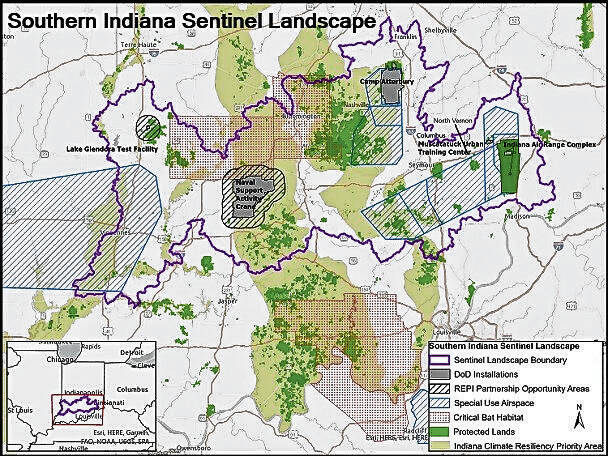
Feb 7, 2023. BC Democrat, Meeting to focus on new federal sentinel landscape area
Other – History.
Council Meeting Aqenda October 17, 2022
Admin Issues. Council reviewed needed changes to the salary ordinance and job descriptions. Job descriptions underwent a needed and thorough review. Changes included a review and update to the Human Resource Director position and a reduction in a pay grade. Other agenda items were routine (and adverstised) fund transfers between accounts.
Note: Job descriptions are linked to salaries and salaries to budget which is why the council is involved.
Budget: The next meeting to finalize the budget will be on Oct 24, 2022, 6:30 p.m at the Brown County Fairgrounds, Exhibit Hall 802 Memorial Drive. The 2022 projected year-end balances can be used to offset the estimated deficit for 2023. This along with other reductions expected to result in a budget that will be accepted by the State. Per Councilman Dave Redding, the 2023 Budget has been one of the toughest to balance in recent memory. Given the economy and inflation, balancing budgets may be a recurring challenge.

Updated: Nov 18, 2022
The justification for a new referendum as opposed to taxpayers receiving a tax cut when the old referendum expires is based on a one-sided closing argument without supporting analysis and evidence of need.
The rationale for the referendum is followed by a marketing campaign and advocacy by surrogates. Attempting to justify the need after the decision has been made is not credible due to bias and compromises the integrity of the surrogates advocating for the new tax.
Nov 16, 2022. BCD. Superintendent offers thoughts after school referendum fails on ballot
History -Systemic Problem – Debt, budget shortfalls, declining enrollment, aging demographic
May 2017. Debt, Enrollment compound concerns for schools’ budget
Nov 9, 2022. WTHR. ‘It felt like a death’ | Brown County voters reject school referendum. Brown County voters were asked to renew a referendum that they approved back in 2016, a $15.1 million referendum that expires next year.
Nov 3, 2022. Act of Desperation? The Facebook Post at Brown County Chatter by the superintendent. Also shared on Brown County Matters claims that amount of the tax increase is “misleading”.
Note also that the referendum will transfer over $15 million dollars from the taxpayers to the school over 8 years. – Not exactly a trivial amount.
Bottom Line Up Front (BLUF). A “NO Vote This Year” may lead the new school board leadership to re-assess the need and scope and develop community-wide support. This could be followed by a defendable argument free of fallacies, to justify the need for additional revenue. (Ref: Critical thinking, arguments, fallacies, rhetoric).
A Recap. The first referendum was passed in 2016 and expires in 2023. The decision to pursue another referendum will generate over $15 million dollars over 8 years. The decision for a new referendum was first “introduced” to the public in the three information sessions on May 31, June 7, and June 14. These meetings were followed by a unanimous vote by the school board (July 14 ) to place the referendum on the ballot. This was then followed several weeks later by a website and marketing campaign including support from a political action committee (PAC).
Lack of Analysis. There has been no comprehensive analysis documented in a published report that defends the decision for a new referendum. Such a report should include the justification of need as opposed to a “nice to have.” Such a report might also include an independent and objective analysis of the results of the revenue from the first referendum. This referendum was also marketed as supporting a need to increase teacher pay.
Analysis, Review, Scrutiny. A comprehensive analysis to justify a need would include a trend of performance to State and local goals and objectives, a mission analysis that identifies what must be accomplished and what is optional, an analysis of alternatives, an analysis of staff pay and increases, a review of revenue and expense trends from all sources, enrollment trends, trends of student-teacher ratios by a school and by grade, the capacity of our existing schools, and the criteria to be considered in the need to close a school. Also helpful would be comparisons with other schools.
McDonald’s Extra Value Meal? The justification by the superintendent has included a statement that the increase in taxes (4 cents) is only the equivalent of the additional cost of a McDonald’s extra-value meal. The new referendum transfers over $15 million dollars over 8 years from taxpayers (over half of whom are in the low to moderate income level) to the school to cover pay and benefits, a new program, and some operating expenses.
Spin on taxes. The tax rate on the expiring (2023) referendum is 8 cents. The rate on the new referendum is 12 cents. The “spin” is the “increase” is “only” 4 cents. The state requires a factual statement on the language that only considers the proposed new rate of 12 cents. The fact: “The average property tax increase paid to the school corporation per year will increase by 33.91% for residences and 20.91% on business property.”
State Funding Policy. Regarding teacher pay, a premise is that State education policy inadequately funds teacher salaries for some districts. (The state has 291 school districts, and relatively few (14 in 2022) have opted for a referendum. Since 2009, the number of operating referendums ranged from 5 to 20. (Source: Department Local Government Finance (DLGF).
Politics and State Policy. The local teachers union, previous superintendent, and school board members signed a resolution in 2021 that challenged Indiana’s Education Choice Policy. Their position is in alignment with the controversial and political left-learning National Education Association which also has endorsed a policy opposing the increases in funding of vouchers that provide parents with a choice in their children’s education. Despite the opposition by many groups throughout the state, the budget bill containing the school voucher language and Education Savings Accounts (ESA) passed the House 96-2 and the Senate 46-3.
Salary Study. On the pay issue regarding teacher salaries, in 2018, the county council with the support of the IU Kelly School of Business, developed a “comprehensive analysis and report” on staffing, pay, and benefits of county employees compared with other counties of our size. This led to some incremental changes. A similar analysis and report regarding county teacher pay and benefits would help justify appropriate action.
Declining Student Enrollment and State Funding. Further, student enrollment has been declining since 2009. Demographics and population projections indicate that this trend is unlikely to be reversed. Are taxpayers being asked to support more staffing and schools that are or will be needed? If so, this needs to be disclosed so taxpayers can factor this into their decision.
Decision-making Process – Court Case. Critical thinking involves being able to make a good argument free of fallacies, and defend it by providing credible counter-arguments. The process is equivalent to a civil case. An argument is made by both sides (pro and con), facts and evidence are presented, experts and witnesses are questioned, and a jury (voter) is then asked to make a decision. In this case, citizens received only a one-sided argument and are asked to vote Yes or No.
Positions – School Board Candidates. For those candidates supporting the new tax, What is their analysis of the “specific” information that was used by the school board to justify their unanimous vote to put the referendum on the Nov ballot? The information on the school website was posted about 2 months after the vote by the school board.
The Brown County Democrat newspaper avoided asking the candidates their position on the referendum. Election Guide: School Board Q&A.
Outside Funding – Political Action Committee (PAC). The Referendum campaign is receiving funding from the Brown County Educator’s Association (BCEA). “The Brown County Educators Association (BCEA) is a professional association organized to support the educators of Brown County Schools. The Indiana Political Action Committee for Education (I-PACE) is the statewide political organization for ISTA. Acting on behalf of I-PACE, the members of BCEA and the L-PAC endorse candidates for local elections.” (Ref: BC Democrat, Oct 26, 2022 advertisement).
The Indiana State Teachers Association (ISTA) is aligned with the National Education Association (NEA). NEA advocates for many policies associated with the ideology of Democrats including covid related policies, social justice, and the divisive and polarizing Critical Race Theory (CRT). NEA also opposes providing parents with school choices that can be funded with vouchers.
The BCEA (local union), the previous superintendent, and the School Board signed a resolution opposing education savings accounts and voucher expansion for private schools in Indiana in 2021.
A delay of a year of a new tax increase should provide sufficient time to make a compelling case (if possible) in these economically challenging times. With the increase in inflation, gas, food, utilities, and overall cost of living, taxpayers should expect information that they can use to make a more informed decision which can lead to community buy-in and support.
Taxes. The new school operating referendum is projected to result in new property taxes that will generate over $15 million dollars over an 8-year period. The proposed tax “rate” is a 50% increase (from 8 to 12 cents) over the expiring referendum that was passed in 2016. Documents approved by the Department of Local Government Finance (DLGF) identify that “The average property tax increase paid to the school corporation (when the new rate is applied) per year will increase by 33.91% for residences and 20.91% on business property.”
Birth to Five. The Brown County Community Foundation (BCCF) along with the school, has been the advocate for this program. They asked for $195,000 from the county (status unknown) to help fund this program and also identified the request for another $157,709 as part of referendum funding. This is likely just a start.
The Department of Local Government Finance (DLGF) has identified that relatively few (14 in 2022) of the 291 school districts in Indiana opt for an operating referendum. Brown County Schools may be unique in that there has been a systemic decline in enrollments since 2009. This fact reduces available funding for staff and programs necessitating more budget reductions than may be desired.
Additional Information:
Facebook Post (shared this post) on the topic at Brown County Matters. My reply to a comment where it was stated I was “over-thinking” the issue:
Sept 29, 2022. ELECTION GUIDE: School board Q&A – Candidates were not asked about their position on the referendum.
Sept 29, 2022. ELECTION GUIDE: What your school referendum vote means, Brown County Democrat.
Aug 12, 2022. School Board – Opposing ESAs and Vouchers
Aug 11, 2022. 2022 School Referendum – Supporting Documentation
July 31, 2022. Critical Race Theory (CRT), Diversity Equity Inclusion (DEI)/Equity Inclusion, and Environmental, Social, and Governance (ESG), are among the many controversial initiatives dividing the country. CRT, DEI, EI, ESG
Updated Oct 8, 2022
The Brown County League of Women Voters endorsed a policy that endorsed a belief “that America is a nation founded on racism …”
My response:
Humans are imperfect. Racism as does other forms of bigotry has always existed to include at the time of our emergence as a country. Slavery has plagued human civilization, exists today, and has been perpetuated within races. The foundation of America’s system of government was influenced by Judeo-Christian principles – not “racism.” Our founders created a system of government that could be “continually improved” in pursuit of “a more perfect union.”
The term “perfect” originates in the Bible – we are all God’s creation regardless of skin color, ethnicity, and gender. Thus the founding principles: “We hold these truths to be self-evident, that all men are created equal, that they are endowed by their Creator with certain unalienable Rights, that among these are Life, Liberty and the pursuit of Happiness…”
The divisive actions from the elites (oligarchs) and those on the farther left are being influenced by Marxist philosophies. Marx credits Lucifer for his inspiration in strategies to divide people by race, age, ethnicity, gender, and economic class.
Our founders designed the first system in the history of the world that decentralized and balanced power and made “We the People” top management. The actions from the elites and far-left have been relentless in wanting to interpret the Constitution any way they see fit to align with their aims. These aims include the desire to shift power from the many to the few which has been a consistent pattern throughout history that never ends well and leads to a hell on earth – 100 million deaths in the 20th century.
The state of the union under this current administration is a case in point regarding the abuse of power and will most likely, only get worse. Higher inflation, unsecured (open) borders, energy prices (gas, electric), food prices, crime, threats of nuclear war, weaponization of the DOJ and FBI, election integrity, and framing your political opponents as enemies of the state to name a few.
I got involved in the development of the Brown County Leader Network to help support a secular, non-secular, and “systemic” approach to improvements at the local level. The decision-making process is an example of an outline for identifying the scope and extent of a problem that supports a solution.
The context for my reply to the Leagues’ positions (which increase variation) is provided on my website and in my book.
Commissioner Meeting Notes, Oct 5, 2022.
Commissioner Meeting Agenda with Notes – Oct 5 2022
Suggestion. PRAYER. Commissioner Pittman leads off the meetings with a Chrisitan-based prayer. Suggest the prayer also ask for specific guidance to support and improve the decision-making process. This would be supported by identifying all the stakeholders affected by the decision, their needs, expectations, and feedback required to validate that the change results in an improvement.
COMMISSIONER MEETING TIMES. The meeting time for the second commissioner meeting of the month has been moved back to 2:00 p.m vice 6:00 pm for the rest of the year to accommodate Commissioner Biddle’s medical appointments and treatments.
(Before Covid, the first meeting was in the morning (9:00?) and the second in the evening (6:00) to accommodate the public). The morning meeting was “suppose to” just cover admin topics. The evening meeting was for issues that required a vote and allow for input and questions by the citizens.
INDIAN HILL ROAD CROSSING – Allowing pedestrian traffic for accessing the Tecumseh Trail (see link below for more info). It has become more apparent that Commissioner Biddle with the support of the Railroad, was and is the county advocate for closing the railroad crossing at Indiana Hill Road and preventing pedestrian access to the trail. There is no documented analysis that justifies the decision. The other two commissioners typically just go along with her proposals without any discussion or debate. Their terms end in 2024.
Commissioners minutes 10-5-22 – prepared by the Auditor’s Office
AUDIO – Discussion Begins at the 40:40 mark
Commissioner Biddle has now identified another alternative for accessing the trail. At past meetings, Jerry Pittman expressed his support for allowing for a pedestrian crossing at Indian Hill Rd and is now supporting the new alternative with little justification for the change. Commissioners were vague on the conditions that would make this alternative route not viable.
The alternate (detour) route was identified by the Hoosier Hiker Council. This group has never presented any information at a council meeting. This route does include a RR crossing at 45 that INDOT can ensure meets standards. In contrast, the information along with supporting and documented detail that was provided at several previous meetings by the Knobstone Hiking Trail Association (KHTA) was ignored.
Hoosier Hiker’s Council. – Tecumseh Trail Re-Route. Note that the reroute involves a one-mile walk on State Road 45 from West Lost Branch Road to the Sycamore Land Trust parking lot for Trevlac Bluffs. SR 45 is a busy highway with little to no shoulder, so walk at your own risk or get a shuttle.
Commissioner Biddle’s explanations for advocacy of the new route included inaccurate information not supported with any references, misstatements, and overstatements. After several years (6+) of attending commissioner meetings, I have learned not to take any statements made at these meetings at face value. The Democrat paper typically reports on “what was said” but not on the accuracy of the statements. Reporters also tend to avoid controversy.
Commissioner Biddle identified at the “beginning” of the meeting that “the commissioners chose a new path.” This decision did not arrive from a public meeting. I asked the commissioners to document the facts associated with this new decision and provide to the public. Jerry Pittman believed this was not necessary – that the audio of the meeting and minutes was sufficient. Minutes have not typically been posted on the county website.
ROADS and BRIDGES. Mike Magnor updated his plan that covers 2021-2026 and provided feedback on what has been accomplished. This will be available at their website.

Sept 23, 2022. Conservatives have become the enemy. Exclusive: Patrice Lewis warns left’s gaslighting, projection setting the stage for ‘something big’
Oct 2, 2022. Memo to Christians: Here’s what’s REALLY at stake in midterm elections David Kupelian de-codes Joe Biden’s bizarre rants, warnings, lies and threats.
Chronology
March 17, 2021 “Unclassified Summary of Assessment on Domestic Violent Extremism (DVE)” UnclassSummaryofDVEAssessment-17MAR21
June 17, 2021. The First U.S. National Strategy for Countering Domestic Terrorism . On June 15, 2021, the Biden administration released the United States’ first-ever National Strategy for Countering Domestic Terrorism, which culminated the 100-day review of U.S. government efforts to respond to domestic extremism that President Biden ordered in January.
Sep 9, 2021. RealClearInvestigations’ Jan. 6-BLM Riots Comparison
Oct 31, 2021. The January 6 Insurrection Hoax By Roger Kimball