Category Archives: Uncategorized

County Voting System – For the Record

Last updated: Feb 9, 2024  

The kick-off: – See Jan 18, 2024 post below

Feb 6, 2024. Brown County Democrat, League of Women Voters: County lacks preparation, resources for switch, by Dakota Bruton

Feb 2, 2024Post at BCM — Introduction – Community Decision-Making Proces

Feb 1, 2024.   County Clerk – Website – Information presented at the Jan 30, 2025 “Hearing.”

Jan 31, 2021. Brown County Democrat: Voting Center Plan Hotly Debated

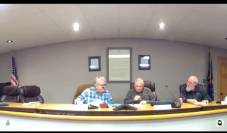
Jan 30, 2024. AUDIO – Election Board Meeting. Public Hearing

    • Update:  Not allowing comments from the public or allowing a limited number of comments or a limited amount of time is permissible. (Ref: Handbook of Indiana’s Public Access Laws, Mar 2022.
    • Meeting Notes are posted at Brown County Matters.
    • Note: The overall strategy at this meeting was on moving to Voting Centers and not including the move to the MicroVote machines. These machines would replace the current system of paper ballots and scanners.  At the Jan 18, meeting, a rep from   MicroVote was also on the agenda which included presentations from other county clerks on their positive experience with Voting Centers.
      • MicroVote. Machine voting also records votes on a paper roll.
      • It was also mentioned that there are options for printing a ballot on demand that would eliminate the need for provisional ballots.  These occur when someone shows up to vote at the wrong precinct.

Jan 30, 2024. Received from the County Clerk:

    • BROWN COUNTY VOTING CENTERS
    • Brown County Vote Center Plan-revision 4
    • Per IC 3-11-18.1-3, Sec. 3(b) (2c) The board shall hold a public hearing to present a draft plan for administration of vote centers.(d) After the presentation of the draft plan under subsection (c), the board shall accept written public comments on the draft plan.(e) At least thirty (30) days after the hearing is held under subsection (c), the board shall hold a public hearing to consider the following:(1) The draft plan(2) The written public comments(3) Any other public comment that the board may permit on the draft plan.(f) After consideration of the draft plan and the public comments, the board may do the following:(1) Adopt an order approving the draft plan.(2) Amend the draft plan and adopt an order approving the amended draft plan.The board may adopt the order to approve a plan only by unanimous vote of the entire membership of the board.

      Public comments will be taken during the 30 days following the first public hearing and can be emailed to elections@browncounty-in.us

      Copies of the draft plan will be made available to the public during the public hearing.

Relevant Statutes:

Jan 30, 2024, 5:30 – 7:00  Public Hearing on Voting Centers, 5:30-7:00.

Jan 25, 2024.  Notes – (Updated Jan 28, 2024): Cost –  Lease Agreements with Municipal Asset Management (Golden Colorado-based company).   10-year lease with 6 years to go or two seven (7) year leases to purchase?  Four payments made toward the purchase? A 2024 payment is due Mar 1, 2024. Payments in 2025 and 2026 would complete the purchase (we would own – 4 year old equipment). The two leases each year total about $30,500. Continuing the leases to purchase would be approximately $91,500. To Do:  Get copies of the agreements

RBM and VR System have been paid.

    • VR Systems – Where we obtain the electronic poll books
    • RBM Voting -Where we obtain the voting equipment.

Jan 24, 2024 Sherrie Mitchell — Letter Voting Centers Brown County Democrat eEdition

Jan 23, 2024. Email – Brown County Democrat – outlining the case Jan 23 2024 – Correspondence BCD

Jan 18, 2024. Election Board meeting Notes – Brown County Matters

    • The Democrat’s position, which I support, is to delay a decision until 2026 to allow time for a bi-partisan review and input from the public. In addition to the League of Women Voters, there are conservative groups in the county that make a good argument for paper ballots and fewer to no machines.
    • The common aim “should be” to work to develop a system that gives ALL voters confidence in the integrity and security of the vote.
    • Making a change in our voting system requires a unanimous vote by the Election Board that consists of three members: The clerk, Pearletta Banks (R), Dick Judson (R), and Rick Kelley (D).
    • Agenda
    • Election Board Agenda Jan 18, 2024

Jan 17, 2024. Jan 17 2024 Letter BCD Democratic Party leader addresses election board

Nov 29, 2023. BCD. League questions election systems, security and vote center planning

Nov 21, 2023. Letter – Brown County Democrat by Shari Frank, LoWV.   Describes the process that led to the justification for the current voting system in Brown County

Legal References

IC 3-11-18.1-3 governs what is required for a county to become a vote center. It does require a public hearing. In additon — IC 3-11-18.1-4, which covers what is required to be in a vote center plan.

IC 3-11-18.1-3Designation of county as vote center county; adoption of vote center order and plan

Sec. 3. (a) A county must comply with this section to become a vote center county.

(b) As used in this section, “board” refers to any of the following:

(1) The county election board.

(2) The board of elections and registration.

(c) The board shall hold a public hearing to present a draft plan for administration of vote centers in the county.

(d) After presentation of the draft plan under subsection (c), the board shall accept written public comments on the draft plan.

(e) At least thirty (30) days after the hearing held under subsection (c), the board shall hold a public hearing to consider the following:

(1) The draft plan.

(2) The written public comments.

(3) Any other public comment that the board may permit on the draft plan.

(f) After consideration of the draft plan and the public comments, the board may do the following:

(1) Adopt an order approving the draft plan.

(2) Amend the draft plan and adopt an order approving the amended draft plan.

The board may adopt the order to approve a plan only by unanimous vote of the entire membership of the board.

(g) All members of the board must sign the order adopting the plan.

(h) The order and the adopted plan must be filed with the election division and must include a copy of:

(1) a resolution adopted by the county executive; and

(2) a resolution adopted by the county fiscal body;

approving the designation of the county as a vote center county.

As added by P.L.1-2011, SEC.3. Amended by P.L.170-2019, SEC.14.

IC 3-11-18.1-4Vote center plan; requirements

Sec. 4. The plan required by section 3 of this chapter must include at least the following:

(1) The total number of vote centers to be established.

(2) The location of each vote center.

(3) The effective date of the order.

(4) The following information according to the computerized list (as defined in IC 3-7-26.3-2) as of the date of the order:

(A) The total number of voters within the county.

(B) The number of active voters within the county.

(C) The number of inactive voters within the county.

(5) For each vote center designated under subdivision (2), the number of precinct election boards that will be appointed to administer an election at the vote center.

(6) For each precinct election board designated under subdivision (5), the number and name of each precinct the precinct election board will administer consistent with section 13 of this chapter for an election that is not being held in each precinct of the county.

(7) For each vote center designated under subdivision (2), the number and title of the precinct election officers who will be appointed to serve at the vote center.

(8) For each vote center designated under subdivision (2):

(A) the number and type of ballot variations that will be provided at the vote center; and

(B) whether these ballots will be:

(i) delivered to the vote center before the opening of the polls; or

(ii) printed on demand for a voter’s use.

(9) A detailed description of any hardware, firmware, or software used:

(A) to create an electronic poll list for each precinct whose polls are to be located at a vote center; or

(B) to manage data in an electronic poll book through a secure electronic connection between the county election board and the precinct election officials administering a vote center.

(10) A description of the equipment and procedures to be used to ensure that information concerning a voter entered into any electronic poll book used by precinct election officers at a vote center is immediately accessible to:

(A) the county election board; and

(B) the electronic poll books used by precinct election officers at all other vote centers in the county.

(11) This subdivision applies to a county in which ballot cards are used at a vote center. For each vote center designated under subdivision (2), whether each ballot card printed will have the printed initials of the poll clerks captured through the electronic signature pad or tablet at the time the poll clerks log into the electronic poll book system printed on the back of the ballot card immediately before the ballot card is delivered to a voter.

(12) The security and contingency plans to be implemented by the county to do all of the following:

(A) Prevent a disruption of the vote center process.

(B) Ensure that the election is properly conducted if a disruption occurs.

(C) Prevent access to an electronic poll book without the coordinated action of two (2) precinct election officers who are not members of the same political party.

(13) A certification that the vote center complies with the accessibility requirements applicable to polling places under IC 3-11-8.

(14) A sketch depicting the planned layout of the vote center, indicating the location of:

(A) equipment; and

(B) precinct election officers;

within the vote center.

(15) The total number and locations of satellite offices to be established under IC 3-11-10-26.3 at vote center locations designated under subdivision (2) to allow voters to cast absentee ballots in accordance with IC 3-11. However, a plan must provide for at least one (1) vote center to be established as a satellite office under IC 3-11-10-26.3 on the two (2) Saturdays immediately preceding an election day.

(16) The method and timing of providing voter data to persons who are entitled to receive the data under this title. Data shall be provided to all persons entitled to the data without unreasonable delay.

(17) In a county in which a majority of votes are cast on optical scan ballot cards, any additional procedures to provide for efficient and secure voting at each vote center, including ballot on demand printing.

Fire-Fighting and Fire Prevention – A Metaphor for County Government

smokey bear only you

Two preferences for Thinking using Fire as a Metaphor

  1. Fighting the fire by taking immediate action to put it out. This takes motivation, skill, courage, and knowledge. The story makes headline news and generates “clicks” on social media.
  2. Preventing the Fire requires the same personal attributes but is not as exciting. Few know about the success of changes that were made that reduced the number of fires. Prevention involves analyzing the root causes of a fire, looking at all the variables and stakeholders, and making the changes needed to prevent or reduce a reoccurrence. This process is referred to as “systems thinking.”    When assessing the results of a change using data, it takes about 7 data points to indicate that the change resulted in an improvement.

For context offering a “system perspective” on Brown County’s sewer expansion project:   BCRSD Sewer Project: Phase 1 Division 1 – Will you be affected?

The challenge is balance. If you are always fighting fires, you always will be.  To paraphrase Ben Franklin,  “An ounce of prevention is still worth a pound of cure.”

The So What?  The desired expansion of sewers in the county was based on what many would consider a one-sided closing argument by the Brown County RSD supported by the commissioners and council.  Did the supporting agencies at the state and federal levels perform their due diligence in approving funding for the project?

Fire Fighting.  Not surprising (very predictable) that there would and will be opposition by property owners who refuse to cooperate and may collectively take legal action regarding easements.

Fire Prevention. I provided “early warning” on this likelihood of opposition for years.  I offered suggestions on better processes for communicating a need and advocated for citizen engagement.  Arguments fell on deaf years.  With a one-party monopoly on political power, “might makes right”  and the “ends justify the means.”  A monopoly is a closed system and can and does morally (right vs wrong) corrupt those who work within it.

The arguments and counterarguments on this project will now be made on social media.  An additional option included Letters submitted to the Brown County Democrat that might include both sides of the debate.   Many people still read the paper just for the letters.   Lettter can be sent to:  newsroom@bcdemocrat.com.

BCRSD Sewer Project: Phase 1 Division 1 – Will you be affected?

BCRSD Sewer Project: Phase 1 Division 1. About 180 potential customers.

Customers started receiving their letters and instructions.  Not surprising that there is immediate opposition that was posted by Jacob Adams at Brown County Matters (public) Brown County Refreshed (private) and Brown County Chatter (private).

The plan for all of Phase I – which would include when and where service will be provided, is not available.

2024 Brown County Regional Sewer  District (BCRSD) Board Members: Mike Leggins(President), Clint Studabaker (Vice President), Richard Hall (Secretary), newest board member – Steve Lngbeen (at-large).

IDEM. Administrative oversight of the BCRSD falls under the Indiana Department of Environmental Management (IDEM). Finances reviews by the Department of Local Government Finance (DLGF).

    • A regional district is an independent local government entity … Decisions about forming new districts are made at the local level. IDEM’s administrative role is to ensure districts are formed according to the legal and technical requirements specified in IC 13-26.”

County Oversight. Board members are appointed by the commissioners and council. The president of the Commissioners is Jerry Pittman. The President of the Council is Gary Huett. Both of these individuals refused to direct the BCRSD to present the BCRSD Strategic Wastewater Plan and Watershed Study at a public meeting. This plan was developed without any public meetings where citizens could provide input. They did post the video presentation on their website.

Internal Controls. Due to their refusal to answer questions about their strategic plan and watershed study, I sent a letter to the governor, state and federal elected officials,  and the USDA Office of Inspector General questioning the adequacy of their internal controls in approving this project.

Legislative Change. It is most likely that addressing the internal control issue will require some changes in state legislation.  For example, the state does not allow county Health Departments to develop septic system-related standards that exceed state standards. A review of new standards is done by a Technical Review Panel.  Yet, county Regional Sewer Districts (RSD) can identify new standards and methods.  Additional Information:  Indiana: Internal Controls – Request for Review – State and Federal

The purpose of internal controls is to help ensure the effective and efficient use of tax dollars and to help prevent waste, fraud, abuse, and mismanagement.  The value of an internal control policy and program is usually unknown at the county level.  Internal controls are the actions that need to be taken to prevent mission failure.

Jan 21, 2024. Copy of the letter I received from a customer. Not included is the satellite image of their property. The mailing included a return envelope, full size, $1.11 stamp.

Jan 19, 2024. A formal request was submitted to the BCRSD for a copy of the names (180) of the customers in Phase 1, Division 1.

Jan 11, 2024.  Formal Request for a copy of the letter sent to the customers, Phase 1, Division 1.

The BCRSD had a copy of the letter at their meeting on Jan 11 but Studabaker (Board VP) directed them not to give me a copy. The rationale was that they did not want me to post before their customers received it. The logic of the delay escapes me. Even though they can provide me the info now, they have 30 days.

If I do not receive the info within this timeframe, I file a formal complaint with the State which gives them another 30 days. I’ve had to go to the State before to get information from the BCRSD.

Commissioner Meeting Notes Jan 17, 2024

commissioner meeting picture

Agenda Commissioners Meeting 2024_01_17

Audio of the Meeting – Length 2 hrs.

This post at Brown County Matters

Agenda Items of Note  

  • Board and Commission Appointments.
    • 1:04:46. I re-applied to serve on the Redevelopment Commission (RDC). Sanders made a motion to accept my re-appointed and Pittman and Wolpert declined to second. They want to interview other candidates that have or may be applying. I’ve been working on a project to baseline our property tax base. Newer technology has recently made this easier and possible.   If I am not re-appointed and elected commissioner, I’ll complete the project.
  • Feb Commissioner Meeting Change:  From Feb 7 to Feb 5, 2024, 2:00
  • 11:42  Helmsburg Regional Sewer Update – Kyle Myers
  • Indian Hill Re-Opening.  Jerry Pittman – Keywords: “still alive, major obstacles, costs and source of funding unknown, logistical considerations in meeting state specs, almost impossible, may have to buy land, may impact Bean Blossom Creek which is controlled by DNR, not sure where this will end up at this time, whatever happens, commissioners made a good effort, more to follow. ”
  • Bond Discussion – In the past to justify the loan, projects were identified by title but not at any level of detail. To his credit, Ron Sanders wants specifics regarding an estimate of costs.  For example, the need for a new prosecutor’s office has been mentioned but no details as to size, cost,  or decision on location. Also, Sanders suggested selling the Music Center may prevent the need to take out another capital improvement loan
  •  Audio – last 10 minutes.  Selling the Music Center – Ron Sanders, pros and cons.  Ron Sanders proposed selling the Music Center as opposed to borrowing money  (2-3 million) for capital improvements. Getting citizen input on the idea of selling the BCMC was a campaign promise.  Ron discussed pros and cons and suggested a public meetings to get input from citizens.  Pittman identified his concern that a private owner could offer events not suitable for Brown County. It was also mentioned by the auditor that a buyer might want an abatement of taxes. The terms of sale can identify that an abatement will not be offered.

County Council Meeting Notes Jan 16, 2024

County Council Meeting Notes Jan 16, 2024

This post at Brown County Matters

Agenda County Council Meeting Jan 16, 2024. A presentation by the Sheriff’s Department (over an hour) was added to the agenda

Audio – County Council Meeting Jan 16, 2024 – Total length: 2: 06:51 https://independentvotersofbrowncountyin.com/wp-content/uploads/2024/01/agenda-county-meeting-jan-16-2023.mp3

    • Election of Officers. Gary Huett was re-elected president. Scott Rudd as Vice president.
    • Appointments – Board and Commission positions
    • 28:00 – 1:37:45 Presentation – Sheriff’s Office
      • This was the “third” presentation by the Sheriff identifying the need for additional funding. The amount he requested was $319, 324. I do not know if this included benefits and other payroll costs.  The shortfall is around 10K per person – deputies, jailers, and dispatchers.
      • There were 21,159 calls to dispatch. The breakdown by categories of these calls was not identified.
      • The decline in the number of law enforcement personnel within the state and nation has led to higher salaries and Brown County is not competitive. For example, we can spend 100K or more to train-up a new deputy who then leaves when they are offered 10K more by another county.
      • There is legislation being “proposed” to provide some reimbursement to counties that lose personnel due to “poaching” by other departments.  Given our lower salaries, we cannot poach from other departments.
      • Other county departments are also underpaid when salaries are compared to surrounding counties and employees feel that they too should be getting increases.
      • The council will be holding a working session to discuss options with the new budget consultant/advisor.
      • The county just does not have the money.  Payroll money is limited which leaves hiring freezes, and staffing cuts as options to provide the money for higher pay.
      • New Revenue?  Eliminating health insurance benefits (around 18K per person) for part-time personnel – including commissioners and council might help.
      • Excess profits from the Music  Center could also be helpful. Currently, 75% of the excess profits are to be given to the Community Foundation and only 25% to the county.  The Music Center Management Group is planning on giving 200K to the Foundation this year and 67K to the county.
        • County personnel may be able to appeal to the foundation to help cover the costs of government.
      • Another option is for more revenue from the innkeeeprts tax to be used to fund the Music Center’s operating expenses which could lead to more excees profits available to county government – 500K to 1 million?  This would require a change in the Admin Agreement.  More info at the following:
    • 1:39 – Scott Rudd – Indian Hill Railroad Crossing.  INDOT treating the re-opening as new which does not require INDOT to provide any funding.   The county is morally obligated to fund this re-opening due to the failure of our commissioners and legal council to perform their due diligence.  Legislation is being proposed to add specific language in a statute to require a public hearing for any railroad crossing.  Commissioners who voted to close the crossing were Jerry Pittman, Diana Biddle, and Dave Anderson. More info at: Link:
    • 1:40:30.  Highway Superintendant.  Money removed from the highway budget was replaced.
      • Funding for new (?) positions was tabled.  This included a supervisory position. The commissioners discussed adding a new position but new a position description has not been approved by the commissioners.
      • Sherrie Mitchell questioned if money was being transferred from funds needed to repair roads and bridges to payroll. Her follow-up with the state board of accounts reinforced that money from the funds could be used to cover an employee’s labor costs to work on a road/bridge repair project.
      • Mike Magnor identified additional staffing is needed.

Updated Notes – May 2, 2024.

    • Audio – Discussion on Highway Position Funding begins at 1:40:30
    • Highway Superintendant.  Money removed from the highway budget was replaced.
      • Discussion on funding for unfilled positions … including a supervisory position ….
        • (The commissioners had discussed adding a new position ..- an assistant supervisor but the position exists – just not filled.
    • 1:46 37 Magnor- Request to fund 6 positions(4 are existing employees)
      • Kemp suggested open positions remain unfunded ..(Fund existing – leave other 2 open and unfunded.) …. Rudd – I thought we did that last time ….
      • Judy Powedrill Swift – in salary ordinance but has to be appropriated
      • Byrd – questions Kemp’s concerns – Kemp references to organization development issues, and need for business planning.
    • Mike Magnor identified additional staffing is needed. Not all 19 positions filled – more efficient without … voluntarily not filled ….
    • Redding – asking for clarification on funding sources …  3
    • 1:53:99 Rudd –  approve funding for 3 existing and one new hire (mechanic)  ..    Redding asking for clarification ….  (unspent money stays in the county). Kemp wants money to accumulate …
    • Motion and Second …

2024 Election – Campaign Priorities and Notes- For the Record

we the people declaration and flag

2024 – Tim J. Clark for Brown County Commissioner, District 3
Updated Jan 12, 2024, 10:00 am.

In America, We the People are “Top Management” and must start acting like it. The responsibility of elected officials is to serve all the citizenry and not just the special interests of one or more individuals or groups.  Citizens are responsible for holding our elected and appointed officials accountable for achieving the desired results.  What do we expect? How will we determine that change results in improvement?

This timeline will likely get pretty long. The intent is to identify challenges and what can be done to make some small changes that will lead to significant improvements. Just managing a simple financial and capital improvement plan would have saved us a million or two and hundreds (if not thousands) of hours spent “fire-fighting” and scrambling to find money to fund important initiatives.  Improvements would have also prevented the downgrades of our credit rating.

Jan 12, 2024. Challenges and opportunities – #2 – Critical Thinking.  Our justice system represents our collective process for critical thinking. Citizens (jurists) have the responsibility to understand both sides of an argument, the counter-arguments, the facts, and the evidence, ask clarifying questions, and then make a decision as to yes or no, guilty or not guilty.  The decision can be appealed where additional citizens can weigh in to help ensure the integrity of the system. Poor decisions by county government can lead to outcomes that may take years (if ever) to correct.

    • Example – Poor Decision – Closing the Indian Hill Railroad Crossing.  About 30 minutes of deliberation, no due diligence, no public hearing, no notification to residents that would be the most affected, and over 3 years and counting to correct. Additional information. Part 4: Closure RR Xing, Indian Hill Rd – Petition to Re-Open
    • One-Sided Closing Arguments. Too often in county government, a one-sided closing argument is made in support of a decision, and any challenges or counter-arguments by citizens are ignored. (see monopoly on political power – below).
    • School Referendum – Round 2 – Background Information.
      • 2022 General Election.  The failed school referendum in 2022 represented a one-sided closing argument based on anecdotes (without context) and emotion.  The challenges and concerns that citizens had with this referendum were expressed on social media including Brown County Matters, Brown County Refreshed, and Brown County Chatter.   My post on the topic:
      • 2023 Primary Election.  The schools have submitted a petition for the referendum to be included in the May primary ballot. I have seen little to no evidence that citizens’ concerns and challenges were considered.  A “survey” (not statistically valid) was designed to attempt to identify community support for the referendum. Note that primaries get a fraction of the vote
      • The Case?  The school has been losing enrollment since 2009.  What is the capacity of the existing schools?  Do we have more staff and infrastructure than we need? If so, doesn’t this reduce the amount of funds available for teacher salaries and programs?  The superintendent informed me last year that no schools would be closed. Why? Who made this decision?  And, if there is a good reason, let people know so they can make a more informed decision.  Counting on lower voter turnout and encouraging advocates to vote in mass for the referendum does not gain community support.

Jan 12, 2024. Challenges and opportunities – #1 –  Monopoly and Performance

    1. Monopoly on Political Power. A one-party monopoly on political power leads to a “closed system” where input from those outside the system is not needed or wanted.  A closed system can contribute to the moral corruption of those who work within it. A closed system cannot produce the best results for the citizenry.
    2. Capability and Performance.  On a scale of 1-6 with 5 being the best, Brown County Government can be assessed at around a 2 which can be described as “It works.”  The cost of poor quality in such a system can range from 20-40% of the budget.  Additional information:  County and Community Capability Maturity And Potential

Jan 12, 2024Campaign Priorities. – Transparency, Accountability, Improvement.

  1. Transparency.
    • The business of government. Post all agendas, minutes, audio/video of all commissioner meetings on the government website. Encourage all other boards and commissions to do the same. Summarize the minutes into a yearly report and share the report with citizens.  The minutes help capture all the good work that is being done in the county.
    • Citizen Input. Citizens will not be prevented from asking questions and challenging policy.
    • Open Meeting Laws. Comply with Indiana’s Open Meeting Laws. Any meeting (working session)  where there is a quorum (2 of the 3 commissioners present) will be posted and the public notified.
      • Elected officials can ignore open meeting laws. Decisions made at illegal meetings can be canceled IF the non-compliance is caught within a 30-day window. Otherwise, the decision becomes policy.
  2. Accountability. 
    1. Financial Plan – Goals, Objectives, Results.  Support the development and management of a county financial plan with a focus on the commissioner’s budget to include the capital improvement plan and budget.  Identify goals goals and objectives. Provide updates on results.
      • Two other important plans:
        • Road Improvement Plan.  Identifies the status of all roads, the plan for repairs and paving, and associated funding.
        • County Comprehensive Plan – Updates. The purpose of the plan is to clearly identify what citizens want and do not want in terms of development, zoning, and quality of life. Our 12-page 2011 plan is vague and insufficient.
    2. Citizen Internal Control Program – Checklists. Key Point: Identify what is required by statute for offices, departments, boards, and commissioners to perform their respective missions; develop a checklist of what must be done to prevent mission failure.
      1. Encourage and support and implementation of a Citizen Internal Control Program at the county level.  This offers one of the better tools for improving efficiency  (doing things right) and effectiveness (doing the right things). Controls also help to prevent waste, fraud, abuse, and mismanagement.
      2. The policy started with the federal government and has been adopted by the states.  A good overview of the federal program – GAO – Green Book.
      3. Challenge to Indiana’s internal control policy and program as it relates to the Brown County Regional Sewer District (BCRSD) sewer expansion project.
      4. The focus of Indiana’s State Board of Accounts (SBOA) regarding internal control is on the financial aspect.  Oversight of operational effectiveness and efficiency is left up to the voters.
  3. Support and encourage continual improvement.  Celebrate successes and look for those opportunities where little changes can contribute to significant improvements.
    1. Brown County Leader Network (BCLN). Includes a self-help support guide including methods and tools that support assessments, decision-making, planning, and project management.
    2. BCLN – Overview of the concept.


Jan 11, 2023.
Submitted the forms to the county clerk to run for Brown County Commissioner, District 3. The seat is now held by Jerry Pittman. Forms required: CAN-2, CAN-12, CFA-1. Forms are available from the clerk and from the Indiana Secretary of State (SoS) office.

Brown County Regional Sewer District (BCRSD) Meeting Notes, Jan 11, 2024

Brown County Regional Sewer District (BCRSD) Meeting Notes, Jan 11, 2024.

Audio of the Meeting.   Total length – 55:51

    • 12:09 mark.  Kevin Allen from BLN provides a technical update on the project.
    • 47:15 – My questions to confirm the key points. Pushback from Studabaker on providing me a copy of the information packet being sent to customers.

Transparency. The neglected aspect of the project is communication with customers and other citizens as to the status and project timelines that could be shared via their website, Facebook site, or articles in the Democrat.  A lack of transparency can be a deliberate strategy.

Officers.  Officers remain the same except the treasurer:  President – Mike Leggins, Vice President – Clint Studabaker, Secretary – Richard Hall, Treasurer – Matt Hanlon, and At-Large Phil LeBlanc (previous treasurer).

Premilinary Engineer Report (PER). Another PER that provides the details for the projects has been completed. The PER has not yet been posted to the BCRSD website.

Funding. The BCRSD has received a Bond Anticipation Note (BAN) of $2.1 million minus legal fees of 36K. The BAN does not have to be paid back. The BCRSD has two years (starting this January) to execute the plan that is being funded. They hope to meet the requirements within one year.

Phase 1/ Division 1.  The money from the BAN will be used to fund all the work required to solicit bids for construction (April 2025).  This would include surveys, engineering reports, and easements.

The Phase 1 project and Sub-phases. The Phase 1 project is broken up into 7 segments or divisions.   Division One will include a line from Helmsburg to the Bean Blossom and extend north to provide service to the Bean Blossom Village. The village includes commercial properties, churches, Bill Monroe Campground, Trailer Park, etc.  Customers in this area (around 180) will be receiving an information packet within the next few days and are being asked to provide information that will include the location of their septic system.

The BCRSD website does not have a current map that identifies the phases and divisions/segments nor is there information on projected timelines for when customers who live in areas that range from Lake Lemon to Woodland Lake can expect service.

Customer Information Packet. Although they had a copy of the packet that was being mailed, Clint Studabaer did not want to provide me with a copy before the customers received it. I will post the packet (public information) on Matters once I receive a copy – probably within the next week.

Meeting Dates: In 2024, All their meetings will be held on the 2nd Thursday of the month, 6:00 at the 4H community room.  The Joint meeting with Helmsburg RSD will be on the 4th Thursday.

Commissioner Meeting Notes, Jan 3, 2024, 2:00 p.m.

Audio of the Meeting

Board and Commission Vacancies

Agenda Commissioner Meeting Jan 3 2023

The highlight:

Total Solar Eclipse. 10:50 mark – Excellent briefing by the EMA Director – Chad Jenkins, on the planning for the Total Eclipse on April 8, 2023.  Guidance from the state on estimates of additional visitors is to plan for 4-5 times the peak volume of visitors that we get in the county. County offices and the Schools will be closed.

Commentary – 2024 Primaries – 2 commissioner vacancies – Pittman (District 3) and Wolpert (District 1).  Sanders was elected in 2022 and started serving his 4-year term this January.

2024 Primary – Commissioner Term Limits. County voters have voluntarily embraced term limits for commissioners consisting of two 4 year terms. Jerry Pitmman is finishing his second term. Wolpert has previously served one term and was not re-elected and was not a successful candidate for commissioner in 2020.  He was elected by 7 of 11 Republican precinct chairs to complete the term of office of Chuck Braden who resigned the position due to work conflicts.  Wolpert was also elected previously by precinct chairs to fill a commissioner vacancy.

Commissioner Sanders defeated an incumbent attempting to be elected to a third term. He has made positive and significant impacts, researches the issues before blindly casting a vote, and represents the interests of all citizens and not just the special interests.  He is too often the only “No” vote on unnecessary spending and ill-conceived changes.

Other

o. Election of Officers. Jerry Pittman and Blake Wolpert nominated and voted for each other as  President (Pittman) and Vice President (Wolpert) respectively. Ron Sanders voted No to each.

o. Jerry Pittman and Blake Wolpert nominated and voted for each other as  President (Pittman) and Vice President (Wolpert) respectively. The same thing happened last year. Both of their terms of office end this year. Ron Sanders voted No to each.

o. 2024 Primaries. In addition to the two commissioners, there will be three council seats and 11 Republican precinct chairs on the May ballot.

o. Prosecutors Office Land Acquisition. As covered previously on Matters, the decision by Pittman and Wolpert to pay $300K for a 1/2 acre is void. The property has been pulled from the market by the seller.  Sanders identified an additional option which would be the space adjacent to the north side of the courthouse.  He will be discussing this option with the Judge, Prosecutor, and Sheriff.  Building at the current location is another option.

    • I am not aware of any documentation that supports the need to demolish the existing building and replace it with a new structure.

o. Capital Improvement Plan.  For the first time in county history, new commissioner Ron Sanders took the initiative to coordinate the development of a plan that is expected to be nearly completed by the end of January. The lack of a plan has been a repeat finding by the state board of accounts.

o. Board and Commission Vacancies.  I “assume” these will be advertised in the Brown County Democrat which I did not see in this week’s paper.  Notification on the Democrat has been the past practice.  Commissioners Pittman and Wolpert stated they wanted to start making selections at their next meeting.

o. Gnaw Bone RSD. No change from last meeting.  They need three new board members and need to contract for maintenance.  The expectation for the previous board members was to also perform maintenance. They need an estimated 500K for repairs and a new plan to support the possible need for expansion.  The big question is whether the RSD will be absorbed by the Brown County RSD or remain an independent RSD that would likely be more receptive to the interests of the area.  The Brown Country RSD has never had any paying customers or experience in managing a functional RSD.  They have been “silent” on the Gnaw Bone RSD issues and challenges.

County Council Meeting Notes, Dec 28, 2023

Agenda County Council Meeting Dec 28, 2023   

Audio of the Meeting https://independentvotersofbrowncountyin.com/wp-content/uploads/2023/12/audio-council-meeting-dec-28-2023-.mp3

This post at Brown County Matters

On the land acquisition for a new prosecutor’s office, the listing has been pulled from the market. Letter from the seller – Encounter Life Ministries (ELM)

To VOTERS:  In considering your votes for the May 2024 primaries, you might consider listening to the audio on the discussion on buying property for a new prosecutor’s office (41.15 on audio).  Funding for the project has not been identified in the 2024 budget nor is there a plan for the size of the building needed.

This is probably one of the more insightful meetings that provide citizens with an opportunity to assess the performance of elected council members and commissioners. Key points from the meeting are summarized below:

Outline of the Meeting / Audio

    • 1:00 – 8:30. Opening/Citizen Questions. Note that not much time is taken up with answering questions.
      • I pointed out that only “Allowing” questions at the beginning of a meeting should be “re-considered.” Questions arise as a result of the discussion on the various topics. Gary Huett, the President of the Council stated that are re-considering the policy and in fact, it was ignored in the meeting. Citizens asked questions as the meeting progressed.
      • The local GoP initiated the “no question” policy last fall. It was ignored. This year, both Commiussiponer Pittman and Councilman Huett reminded citizens that they do not have to allow for any questions. Why the threat?
    • 8:40 – 16:30.  Highway Department – Roads. Of interest: For the first time in 5 years, the county did not get the 1 million community crossing grant that funds road maintenance. The state limited the money going to counties. However, in 2024, the amount available increases to 1.5 million and we may have a good chance of receiving this money.
    • 16:30 to 19:20. A little more detail on the health insurance fund. Note that as Jim Kemp points out, health insurance costs are our highest financial risk. It is less expensive to be self-insured BUT it comes with risk and until recently, the council has not prioritized (or even considered) the need to have an additional fund to save money for a very bad year.
    • 31:05. 2023 Salary Ordinance – Close-out.  Nothing significant.
    • 40.25 – Council Contract with a New Attorney. Minor issue, easily resolved. If you listen to the discussion on property acquisition, you can better understand why the council desperately needs its own attorney who is experienced in county government. 
    • 41:15. PROPERTY ACQUISITION – The HEADLINER ISSUE – STAR OF THE SHOW.

This discussion starts at the 41:15 mark on the audio. Very insightful discussion. Arguments could be made as to why  those councilmen voting Yes should  receive feedback that they should be “FIRED” or given an “ATTA BOY.”

Additional coverage of this meeting is discussed at Brown County Refreshed – a private Facebook group – the admin is Sherrie Mitchell who also attended the meeting.

Background. Commissioner Pittman and Wolpert voted to purchase property for a new prosecutor’s office at their Dec 27, 2023 meeting. They need the support of the council via a resolution and ordinance supporting the acquisition. Commissioner Wolpert- voted in by 7 of 11 republican precinct chairs to fill the position vacated by Chuck Braden, is the lead spokesman for the local GoP and Commissioner Pittman.   Commissioner Sanders voted No on the acquisition and identified additional and likely more cost-effective options.

The (300K) Land Acquisition is the last topic on the agenda. The need for due diligence is represented by council members Kemp and Swift-Powdrill. Councilman Redding was absent but can also be a  voice of reason.   Challenging the dictates from the local GoP leadership can have its downsides.

Fast-Track. The local GoP is “HOT” for this property purchase. When these kinds of decisions come up, they put together their talking points that parallel  “The Sky is Falling Unless We Do Something  NOW!” narrative. They appoint spokesmen (s), reinforce the expectation among their faithful for Yes votes, and push/force things through as fast as possible (fast-tracking). The belief is that this  can prevent opposition that can form to slow things down and allow time to perform some semblance of “due diligence.”    This prevents the obvious questions such as: “What the hell are you thinking?”

(This fast-track strategy was used to close the railroad crossing at Indiana Hill Rd. A decision where those opposing the closing spent three years reversing with more left to do.)

In this case, the council voted 4 Yes to 2 Nos to support a property acquisition for a new prosecutor’s office “before” they have ANY idea as to what is exactly needed, i.e., a requirement such as size/square footage, etc. “Due Diligence” requires working through the TOTAL COST ($1.5 – 2 million?) of the project – NOT just land (300k) “and” site prep at $50-100K?

Drafting a Resolution during the meeting. The discussion on Resolution vs Ordinance was “confusing.” To get a vote, Councilman Byrd drafted a Resolution followed by the vote. This was an unprecedented act – never seen it done before. I did witness the commissioners vote on the Resolution that did not exist to close the Indian Hill RR crossing.

Property Acquisition Votes: YES Votes: Huett, Rudd, Kirby, Byrd. NO votes: Kemp, Swift-Powdrill. Redding absent.

Capital Improvement Planning. A need for a new prosecutor’s office was been recognized for over 10 years. Until this year, the commissioners refused to develop any capital improvement plan or budget to identify infrastructure needs to include repairs, replacements/new buildings, and funding.  The lack of a plan has been a repeat finding from the State Board of Accounts(SBOA) that can be and was ignored by county elected officials.

Newly elected commissioner Sanders has been working on a plan and has worked to identify options. However, since he was not the preferred candidate for the Local GoP and their agendas, he is marginalized. Voters can get him some help starting with the 2024 primaries.

Last fall, the commissioners approved funding an addition (around a million dollars) for the courthouse. BUT, all the money for the project was not identified. In the “Search for Money” –  soon to be a major motion picture starring Indiana Jones, money was found for the courthouse project along with an additional $1.4~ million of funds we did not know was available. These funds were applied to health insurance costs that allowed the county to eliminate the deficit. This is the first time in over 4 years we did not start the year in the red.

The more good news is that a systemic problem with budgeting has been identified and corrected, which will hopefully, prevent a re-occurrence. Note that a former auditor uncovered the same issue – money available but not accurately recorded.

Other positive improvements this year have been hiring a new county financial/budget consultant and a new attorney for the council.  Ron Sanders also has been instrumental in representing the interests of all county citizens and not just the special interests. Jim Kemp identified the costs and risks related to health insurance.

History –  Prosecutor Space Requirements:  The county spent 16K (2018) on a study/plan developed by DLZ to build a New Justice Center that included the space requirements for the prosecutor’s office. The total cost of the project would have maxed out on what we would be allowed to borrow. The plan did not identify a compelling need to justify the scope and cost. Changes have since been made to the existing courthouse at a cost of under 2 million dollars and a new prosecutor’s office would likely cost under 2 million. Of interest?  The top floor of the old (abandoned) courthouse would have been used for commissioner’s offices.   Their offices have since been expanded in the space vacated by the Health Department. A new building (the old Nashville PD) was purchased that now houses the Health Department. The initial justification for this acquisition was to provide space for community corrections. The same rationale was used to procure the building ” a once in a lifetime opportunity  …. blah, blah, blah.

Commissioner Meeting Notes, Dec 27, 2023

commissioner meeting picture

This post at Brown County Matters

Agenda Commissioner Meeting Dec 27, 2023

Audio of the meeting – Outline https://independentvotersofbrowncountyin.com/wp-content/uploads/2023/12/audio-commissioner-meeting-dec-27-2023.mp3

    • 3:36 – 35:30.  Courthouse – Change Order of $24, 575.
    • 36:00 – 56:11 – Gnaw Bone Sewer – Management, cost increases, option
    •  56:20 -1:12 – Proposed Property Purchase
    • 1:12 – 1:26 Music Center – Profit Distribution
    • 1:26 – 1:34 – Cottonwood Rd – Follow-Up

NOTES

Gnaw Bone Regional Sewer District. Board members are retiring and there have been no volunteers to fill the positions. Customers are paying around $65 a month which will likely be increasing. (Helmsburg customers are paying $92.50 a month.). An increase would require a rate study. There are maintenance issues that may require around 500K to address. More importantly, there are management issues – IDEM oversees RSDs. The Gnaw Bone RSD has asked for support from Brown County RSD (BCRSD) who can take over the district with IDEMs approval. This would give the BCRSD actual “paying customers” and the opportunity to demonstrate their capability to provide outstanding customer service.

Options of selling and having an outside group manage the RSD were also mentioned.  In addition to maintenance, additional capacity may be needed to support future customers.

A “contractor” to the BCRSD – Kevin Allen from BLN, was asked to provide an update on the status and the options to the commissioners. The VP of the “Brown County” RSD – Clint Studabaker was in attendance and was silent during the discussions. This was curious in that Studabaker led the development of a “County-wide” wastewater strategic plan at a cost of over $100K. Note also that IDEM approved the Gnaw Bone RSDs request for board members to be elected by customers as opposed to commissioners and council. So why isn’t Studebaker/BCRSD taking the management lead on behalf of the county?

The overall discussion reminded me of an Abbott and Costello comedy routine – “Who is on first?”

Land Acquisition. Commissioner Pittman and Wolpert proposed buying a $300,000 property near the county building to build a new prosecutor’s office. Another option is to build it at the location of the existing prosecutor’s office – an option proposed by Commissioner Sanders.  The existing buildings at both locations will have to be removed. Commissioner  Sanders also identified another possible option of a building acquisition. Stay tuned.  For some reason, the local GoP is hot for the acquisition.

Rent to Own?  No discussion on the source of the funding for a county that reportedly is operating at a deficit and drawing down reserves.  Discussions for funding the new building have included borrowing the money or having a company build it and lease it back to us where we would own it at the end of the lease.

Music Center – Profits. Commissioner Sanders made a motion that 100% of the excess profits from the Music Center be returned to the county. His motion was NOT supported by Commissioner Pittman or Wolpert.  Wolpert equated the idea as “looting them.”

Councilman Kemp pointed out that tourism generates additional expenses on the county that we are not reimbursed for and that a separate fund can be established to cover these expenses with the profits from the Music Center.  One of the justifications for funneling the money to the Foundation was to prevent the county from frivolous spending.

The Community Foundation believes they are “entitled” to receiving the funds. Their webpage identifies that they did donate “some” money but does not specify the amount. However, federal taxpayers contributed $2.7 million in grants and county taxpayers another $239K. The foundation has NEVER had any risk nor have their board members explained to county citizens why we should be subsidizing their organization.

The current admin agreement identifies that 70%of any exec profits (“if legal”) are to go to the Community Foundation and 25% to the county. This admin agreement was developed by the Music Center (Maple Leaf) management group and NOT approved via a vote at a commissioner or council meeting. The management group consists of 5 self-appointed and non-elected officials (Barry Herring, Kevin Ault, Jim Schultz, Diana Biddle, Bruce Gould) and two elected officials – Darenn Bryd of the Council and Jerry Pittman from the Board of Commissioners.

Councilman Jim Kemp sharing his perspective as a taxpayer, reinforced that costs of tourism are subsidized by county taxpayers and suggested that a new fund be established and profits from the Music Center applied to cover these expenses.

Commissioner Wolpert proposed that they meet with the Music Center management group and discuss changes. I suggested the Commissioners hold a public meeting to get citizen input on this arrangement.  I will be surprised if this happens.

Courthouse Addition – 25K Change Order  – “Last Summer”, a change order was needed and approved to correct a mistake in the specifications. Typically, the additional cost is at the expense of the architect – DLZ. However, DLZ wanted the county to pay for it. Commissioners are proposing that the county pay half and DLZ pay half.   This agreement is contingent on DLZ accepting the proposal.

Gifts and Gratuities.  DLZ also proposed that the county pay 100% and they would provide future services at a cost equivalent to the change order.   Note that DLZ (and other contractors to county governments) offer gifts/gratuities at commissioner and other county government-related conferences.  To prevent the appearance of a conflict, should the county develop the “first ever” policy on accepting gifts and gratuities. Background information: Personnel Policy – Gifts and Gratuities

Kevin Allen of BLN questioned the practice of a company offering free services for future projects.  BLN is a competitor of DLZ and is emerging as the local GoP’s favorite go-to contractor.

Cottonwood Road – Condition. The condition of the road and request for help was discussed at the Derc 6 meeting. Commissioner Sanders committed to following up with the request for more gravel on the road. Background info: “Gravel Road Policy – Safety, Maintenance, Costs https://independentvotersofbrowncountyin.com/2023/12/07/gravel-road-policy-safety-maintenance-costs/