County Council Meeting Notes, Aug 19, 2024, PACES

MEETING AUDIO 

 Council Agenda 20240819 Council

    • Rescinded an adoption agreement where a retired employee receiving a  PERF pension would also receive an 11.2%  county contribution into their 457b plan.  The adoption of this agreement by the council was illegal and is recorded as a contribution by the employee subject to FICA / Medicare-related taxes. The county may need to pay the IRS around 20K, not counting penalties.
    • Ordianance approving the General Obligation Bond was approved. The amount to be borrowed is not to exceed 4 million.
    • Sheriff.  Stipends funding salary increases were approved for 2024.  the increase were funded through monies received from the Department for Corrections for housing out-of-county inmates.  This generates about 25-30K a month.

Appropriation Transfers.  A standard format would help streamline this decision. Format would include the justification, account number and amount of funds to be transferred from and account number and amount to be transferred to.

Last hour of the meeting:  Presentation: Positive and Adverse Childhood Experiences Initiative (PACES)

    •  PACES – Program Description. Brown County PACES (Positive and Adverse Childhood Experiences) Initiative . This project, created by Centerstone in partnership with The Brown County Recovery and Wellness Coalition, seeks to prevent substance use disorders and strengthen family services in Brown County. PACEs approaches its targeted disparities through the ACEs (Adverse Childhood Experiences) questionnaire, which measures early childhood adversity and is used as a predictor for various physical, mental, and behavioral disorders later in life. The PACEs team works to meet their goals through community outreach and trainings, transportation programs, criminal justice advocacy, and more. By raising awareness of ACEs and providing direct support to those who have experienced them, PACEs aims to reduce the impact of ACEs on individuals, families, and their community.
    • Partners: Centerstone – Nashville, The Brown County Recovery and Wellness Coalition

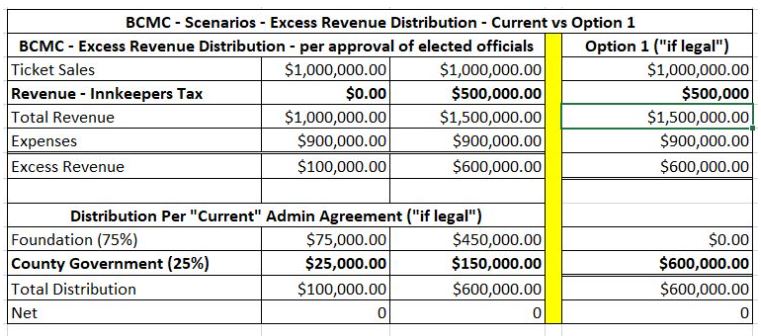
Revenue Innkeepers Tax – Better Process

CVC_CVB System Map 1.3

This post at Brown County Matters

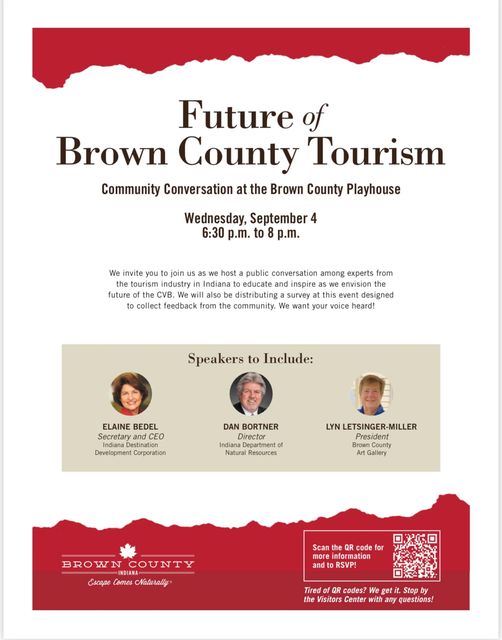
Future of Tourism – CVB Presentation and Discussions – For the Record

The Flaw or Opportunity in our system of government?  Our system was designed to enable We the People (top management) to work towards “a more perfect Union.”  The founders left it up to future generations to determine how best to do this. We elect representatives and then hope they can and will do the right things in the context of the Constitution. In terms of political involvement, given a particular change, a few will love it, a few will hate it, many may care less, and the rest may be persuadable one way or the other.

 On controversial policies, some win, some lose (win/lose), and those who did not get the outcome they wanted can accept it or work to undermine and/or reverse the decision, which, if successful, starts a new cycle.

Consider a local example.   How should citizens determine the best options for investing the excess revenue from the innkeeper’s tax?  Who should decide? Is it solely the responsibility of elected and appointed officials?   What role, if any, should the citizen play?  Should a citizen even be aware of these decisions?  The revenue from the tax generates over $1.3 million a year and has indirectly become a new source of revenue for county government via the Music Center.

I drafted a System Map to help illustrate how the money is received and managed. There are likely very few people in the county who could explain the total system or maybe even care.  The supporting documentation for the system would be over 100 pages.

My point is this: We can implement a more robust process for educating citizens about the system and investment policy and provide feedback on at least an annual basis. This can lead to a more balanced outcome. While everyone may not get exactly what they want, they can confidently believe the decision-making process was as fair and objective as possible, with the expectation of future improvements.

How? The one responsibility we have as citizens is to serve as jurists. A justice/citizen is responsible for understanding the facts presented, listening to both sides of the argument, the counterarguments, and closing arguments, and then making a decision.  The decision becomes a precedent. The process includes a transcript of the proceeding and can even be streamed and made available on video (24×7).

Collaborative Decision-Making Process.  This would include a series of presentations (15-20 minutes ?) on each aspect of the “system” that can be videotaped, documented, maintained on the county website, and shared via the media via articles and posts.  This allows those involved in the system to explain their role and responsibilities and allows citizens the opportunity (at any time) to educate themselves on the system and policy. This “process” can assure citizens that we are working towards the best solutions for the county.

 The Benefit?  This would include “Community buy-in for the solution,” less time discussing one or more aspects of the process without understanding how all the pieces fit together, and recognition for the citizens taking the time to improve our county.  An optimal decision is fixing something in one area without making it worse in others – everyone benefits or, at least, is not any worse off.

RDC Meeting Notes Aug 20, 2024

Handouts

  • Changes to Minutes for June (Delete – No value from RDC) and July (add elected official brief)  
  • RDC Aug 20 2024 – Pre meeting Notes – agenda Items
    • On the 2019 economic development strategic plan, Good idea on using the format for goals and objectives. (This document was approved for payment only and then tabled by the commissioners for a variety of reasons).
    • In the area of strategic planning, it helps to start with an overall concept – a common operating picture. This “picture” varies by group and it helps to at least identify the groups (stakeholders) and their respective interests. There is a format for development of a strategic plan at the following: https://browncountyleadernetwork.com/support-services-2/.
    • The BCLN was developed as a result of a grant that the RDC received in 2017. On the development of the new county comprehensive plan, we do need a support strategy. I suspect people are not aware of the zoning maps and what exactly can be allowed within the respective zones, Spot Zoning is a concern. Some areas may want more commercial development that can be supported with an EDA, CDC, TIF/Other.
    •  On agenda items, (1). RDC Annual Report. The RDC is required to produce an annual report to include budget expenditures. This follows the discussions we had after the last meeting about informing the council and commissioners on the RDC’s concept for supporting development via EDAs, CDCs and possible TIFs (and other RDC funding options) in the various areas. This has been the major focus this year and included conversations with the county’s financial advisor and Tom Pitman from B&T. (2). Tilton/Apartment Project Update.
    • Any updates from the briefing to the joint session of the county council and commissioners? This occurred the day after our last meeting. What if the project is approved – then what?
    •  Nashville’ Sewer Expansion Plan. On the possible EDAs that fall within Nashville’s Sewer Expansion area, what is the position of Nashville’s Town Council and Utility Service Board (USB) on the issue? What are the USBs priorities and timeline?
    • TIFs and Other Options for the RDC to Fund Projects. I would like to know more about the funding aspect. If the county does not have the money to fund an infrastructure project, is the process similar to what we have to do for the capital improvement loan? This requires a resolution to approve a General Obligation Bond which is paid for with a new property tax. On any new taxes to support private development projects, taxpayers will expect to be informed of the risk related to the expected return on investment. TIFs eventually provide a source of revenue from increases in assessed values but capital is needed up front.
    • Property Tax and Assessment Database. I did get the needed approvals that granted the RDC access to the data. There is a learning curve. For example, I attached a list of the available data but they did not have a “dictionary” to define the terms. Getting this information will require digging into any manuals that are available.
    • IU. I do want to reach out to IU to see if they are interested in supporting. I developed a good relationship in 2017-2018 with IU’s Graduate Masters Public Administration (MPA) program, and we had two successful student-led projects.
      • May be good to wait until after the Nov election when we have two new commissioners. A software (analytics) package that we can use is Tableau. This is used by The State of Indiana Management Performance Hub (MPH). Tableau is also used by IU, to include Stats Indiana. Once we get the needed support, we can create additional databases to add income data and job categories (NAICS) to assess trends. Longer-term, I would also like to develop a financial decision-support model.   

CVC_CVB Mgmt of Revenue from Innkeepers Tax

The CVC/CVB relationship was briefly discussed at today’s County Council working session. The management of the revenue from the innkeeper’s tax varies significantly among many counties.

Some counties do not have a “CVB”—in some counties, the county manages a visitors center and employees.

Aug 14, 2024. Brown County Democrat.

20240814 BCD CVC_CVB

CVC_CVB System Map 1.3

Internally Lit Signage

Jan 22, 2024,  This change was first proposed in January and then rescinded.

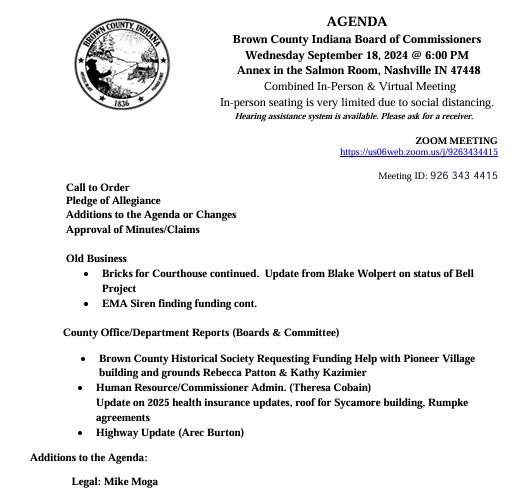
Area Plan Commissioner Hearing,  Aug 27, 2024, at 6:00 p.m. County Office Building.

Amendment to the Zoning Ordinance.  Blake Wolpert for the Brown County Board of Commissioners is proposing an amendment to the zoning ordinance to allow internally lit signage.

This post at Brown County Matters.
20240814 BCD Amendment Internallly Lit Sign

Other proposed changes in Signs:

Brown County Matters – “Electronic” Signs – First proposed in 2018 https://www.facebook.com/groups/1749284288485538/posts/1875630182517614

The “Electronic Sign” issue received a resounding “No-Way” vote on Brown County Democrat’s Facebook page.

Brown County Matters. https://www.facebook.com/groups/1749284288485538/posts/1875782035835762

July 25, 2018. Here is the PDF file about traffic safety and electronic signs that I mentioned in an earlier post. This file contains much information concerning the dangers of electronic signs on traffic.

Given that a sign of Maple Leaf would be aprx. 500 feet from a stoplight on SR46, it is a MUST read for anyone who values their driving safety and /or has concerns about traffic distractions in an already congested area.

While the report is long, the critical sections are highlighted in bold type so it does not take much time to review its critical points.

2024 General Obligation Bond

This post at Brown County Matters.

Brown County Council – Meeting:  Aug “19”, 2024, 6:30 p.m. (Date in paper is wrong).

Purpose: Approve borrowing for capital improvements. Projects include replacing air conditioning units at the jail, building a new prosecutor’s office, and repairing work on the courthouse.

General Obligation Bond: Amount not to exceed 4 million and a maturity date no later than Jan 15, 2030.

Goal:  The County routinely borrows money to fund capital improvements.  The last bond was for 3 million, at 3 years at an interest rate of less than 1%.  Property taxes are raised to pay the bond. The goal is to keep the tax rate close to the same so that taxpayers do not notice an increase. The term used is “tax neutral.”  

20240814 BCD GO Bond - 4 million 2030

Free Press Indiana – Documenters

Free Press Indiana

Free Press Indiana – … building a movement for local news. Strengthening Indiana’s communities and ensuring Hoosiers have the news and information they need.

This post at Brown County Matters

A model (in Indianapolis) for engaging citizens in attending government meetings and sharing the information on social media and a website.

“Documenters are paid $20 an hour to attend an in-person public meeting and take notes or live tweet. These notes are edited, published, and available on our Documenters page. Our goal is to capture what happens at local public government meetings and create a public record of each meeting in Marion County.”

Mirror Indy features an innovative, community-led reporting model, including a local affiliate of the Documenters Network by City Bureau, which trains and pays residents to cover public meetings.

    • Mirror Indy – ABOUT  The real, full and multi-faceted story of our city. We will shine a light on the truth and make Indy stronger, together.
      • Vision: A stronger Indianapolis, where democratized storytelling ignites action.
      • Mission: To provide community-based journalism that informs and empowers Indianapolis residents to shape their city for the better.

    • Documentor ... Indy Documenters are your neighbors! We focus on equipping people to access and produce the information they need, and working together to hold our government decision makers accountable. Interested in becoming an Indy Documenter? Visit the Documenters website to learn more.
    • How to join Indy Documenters,  A step-by-step guide for signing up to work with us.
      • Indy Documenters is Mirror Indy’s program that mobilizes residents around civic engagement and citizen journalism, allowing neighbors to share their voices and learn a new skill. Powered by the award-winning Documenters Network by City Bureau, we train and pay residents to document local government meetings.

        Documenters are paid $20 an hour to attend an in-person public meeting and take notes or live tweet. These notes are edited, published, and available on our Documenters page. Our goal is to capture what happens at local public government meetings and create a public record of each meeting in Marion County.


Commissioner Meeting Notes, Aug 7, 2024

This post at Brown County Matters.

AGENDA Comm Mtg 20240807

AUDIO of the MEETING

Commissioner Meeting Notes, Aug 7, 2024

Request for a Zoning Change from Residential to Commercial. 2518 Lanham Ridge Rd. Note the change would be classified as “Spot Zoning” which is not considered a best practice within the planning community.

The property included an 8-bedroom lodge built in the 1930s when the property included 100 acres. It has consistently been zoned residential and used as an Airbnb and for short-term rentals.  The septic system may be undersized and not up to code. There are additional complaints regarding violations of the county zoning ordinance. The Area Plan Commission (APC)  unanimously recommended that the commissioners “reject” the request. The neighbors in the area are also opposed to a zoning change and stated there have been many noise, trespassing, and traffic-related problems.

Interim Commissioner Wolpert stated he spent time looking at the issues, visiting the property, was familiar with the area and that the property was a “jewel.” He further stated that a re-zone would support the vision of Brown County as a “premier tourist destination” …. “our business is tourism.” The commissioner voted unanimously to table the decision pending additional information, including the resolution on the status of outstanding issues.

Commentary “Our business”.  We are a bedroom/retirement community.  Tourism brings in about 12 million in taxable wages.  All the residents filing tax returns in the county bring in (per the IRS) $550 million in taxable wages (AGI).   The GDP in our surrounding counties is 29.5 billion. Our county GDP is 362 million.   Over half of our land in owned by the government and non-profits and is not taxable. BUT, this fact is what attracts and retains residents!!!

County Comprehensive Planning. The County Comprehensive Plan should clearly identify what citizens want and do not want in terms of quality of life, cost of living, and development. The plan is required by statute to support zoning and zoning correlates to the sustainability of the tax base.

The county has started efforts to develop a new county comprehensive plan. Development and approval of the plan require public meetings and a final vote by the commissioners. This may be quite the battle that pits residents (bedroom/retirement community) against interests that see the potential for more commercial/tourism-related developments and possible higher-end residential developments Commercial development could include more tourist rentals and businesses that cater to tourists. This can attract more retail businesses that can serve residents.

ORV Ordinance.  The county received a request from a resident to exclude ORVs on a road. To update the ordinance to include the county road (s)  to be restricted, will require two meetings.

Tax Policy. The county tax policy of high-income and low property tax rates contributed to home/land prices that have priced those at low to moderate income levels out of the housing market. This impacts school enrollments (lack of younger demographic) with kids that have been consistently declining since 2008. it also contributes to less housing for those workers supporting the tourism industry.

Repeal—County Septic Ordinance. Commissioner Pittman raised the issue on the need to “repeal” the ordinance. He was not in support of the ordinance because it had too many requirements that exceeded what the state required. The Legislature later passed a change in the law that required the county to get approvals for any requirements that exceeded state standards.

Contract – Construction Manager.  Commisioner Pittman and Wolpert signed a contract for services of a construction manager to help oversee construction-related projects in the county.

“Stellar. – 2026. ”  The Stellar grant will not be available in 2025 but may be in 2026. Commissioner Sanders stated that he has met with state officials who informed him that any projects that affect utilities require a four-year lead time. This may impact any proposed project that may need to be “shovel-ready.”  Sanders reinforced the importance of the County Comprehensive Plan to ensure that citizens have a voice in deciding the needed project and their respective priority regarding the future direction of the county.